
Blog

  • Personal Loans for Vacation: Is Borrowing Worth It?

    Personal Loans for Vacation: Is Borrowing Worth It?

    Should You Take Out a Personal Loan for Your Next Vacation?

    Nearly 1 in 3 Americans goes into debt to pay for vacation — and the average travel-related debt hits $1,979, according to a LendingTree survey.

    Planning a vacation is exciting. Paying for it when you get home — not so much. Whether it’s a family trip to Disney World, a honeymoon in Europe, or a long-overdue beach getaway, travel costs can add up fast. And when savings fall short, many Americans turn to personal loans to bridge the gap.

    But is a personal loan really a smart way to fund your vacation? Or does it turn a week of fun into months of financial stress?

    In this guide, you’ll learn exactly how personal loans for vacation work, when they make sense, what they truly cost, and what smarter alternatives might look like for your situation. We’ll cover interest rates, repayment terms, eligibility requirements, and the hidden pitfalls that can turn a dream trip into a debt trap.

    Whether you’re seriously considering this option or just curious, this breakdown will give you the full picture — so you can make a confident, informed decision.


    What Is a Personal Loan for Vacation — and How Does It Work?

    A personal loan for vacation is an unsecured installment loan that you can use for any travel-related expense — flights, hotels, cruises, theme parks, car rentals, or all of the above. Most lenders don’t restrict how you spend the funds, which gives you flexibility.

    Here’s the basic structure:

    • You apply through a bank, credit union, or online lender
    • If approved, you receive a lump sum deposited to your bank account
    • You repay the loan in fixed monthly installments over a set term — typically 12 to 60 months
    • Interest rates (APR) vary based on your credit score, income, and the lender

    Because these loans are unsecured, they don’t require collateral like your home or car. That’s convenient — but it also means lenders charge higher interest rates to offset their risk.

    According to the Federal Reserve, the average interest rate on a 24-month personal loan in the US was approximately 12.35% APR as of late 2025. For borrowers with excellent credit (720+), rates can dip to 7%–10%. For those with fair credit (580–669), rates may climb to 20%–30% or higher.

    So if you borrow $5,000 for a vacation at 15% APR over 36 months, you’ll end up paying roughly $6,200 total — meaning that vacation costs you $1,200 more than the sticker price.


    Key Benefits of Using a Personal Loan for Travel

    Despite the interest costs, there are legitimate reasons why a personal loan can make sense for some travelers. Here’s where this option genuinely shines:

    1. Predictable Monthly Payments

    Unlike credit cards, personal loans have fixed interest rates and fixed monthly payments. You know exactly when the debt will be paid off — which makes budgeting straightforward. No minimum payment traps, no fluctuating balances.

    2. Lower Rates Than Many Credit Cards

    The average credit card APR hit a record 21.76% in 2025, according to the Federal Reserve. If you have good credit, a personal loan at 10%–14% APR can be significantly cheaper than carrying a balance on your credit card month after month.

    3. Fast Funding

    Many online lenders fund personal loans within 1–3 business days. If you need to book a trip quickly — say, for a family reunion or a time-sensitive travel deal — this speed can be a real advantage.

    4. No Collateral Required

    You’re not risking your home or car. If your financial situation changes, the consequences are serious but don’t include losing a major asset the way a home equity loan or auto-secured loan might.

    5. Larger Loan Amounts Available

    If you’re planning a high-cost trip — an international family vacation, a destination wedding, or a luxury cruise — personal loans can offer amounts up to $50,000 or more, far exceeding what most travel credit cards allow without maxing out limits.

    That said, benefits only tell half the story. The costs and risks deserve equal attention.


    How to Get a Personal Loan for Vacation: Step by Step

    If you’ve decided a personal loan is the right move, here’s how to approach it strategically:

    1. Check your credit score first. Pull your free credit report at AnnualCreditReport.com or use a service like Credit Karma. Your score directly determines your interest rate. A score above 700 puts you in a much better position.
    2. Calculate how much you actually need. Build a detailed travel budget before applying — flights, lodging, food, activities, and a 10%–15% buffer. Borrowing more than you need means paying interest on money you didn’t use.
    3. Compare multiple lenders. Don’t go with the first offer. Check rates from at least 3–5 sources: your current bank or credit union, online lenders like LightStream, SoFi, Upstart, or Marcus by Goldman Sachs, and credit union options if you’re a member. Many lenders offer prequalification with a soft credit pull — meaning you can see estimated rates without hurting your credit score.
    4. Evaluate the full APR — not just the interest rate. Some lenders charge origination fees of 1%–8% of the loan amount. A loan advertised at 10% APR with a 5% origination fee is significantly more expensive than it first appears.
    5. Choose the shortest term you can afford. A 24-month repayment term will cost less in total interest than a 60-month term, even if the monthly payment is higher. Run the numbers before committing.
    6. Submit your formal application. You’ll typically need proof of income (pay stubs, tax returns), proof of identity, and banking information. Approval decisions from online lenders often come within minutes to hours.
    7. Review the loan agreement carefully. Before signing, confirm the APR, term, monthly payment, prepayment penalties (if any), and origination fee. Never skip this step.

    If you’re self-employed, the process involves a few extra steps. Check out our guide on Personal Loans for Self-Employed: How to Qualify in 2026 for a detailed breakdown.


    Costs, Fees, and Real Risks to Understand

    This is the section most vacation loan guides skim over — but it’s arguably the most important.

    Total Interest Cost

    On a $5,000 loan at 18% APR over 48 months, you’ll pay approximately $2,040 in interest alone. That’s a significant premium on top of your travel costs. Always use a loan calculator before committing — Bankrate and NerdWallet both offer free tools.

    Origination Fees

    Not all lenders charge them, but when they do, origination fees typically range from 1% to 8% of the loan amount. On a $6,000 loan, that’s $60 to $480 taken off the top before you see a dollar.

    Prepayment Penalties

    Some lenders charge a fee if you pay off your loan early. Always read the fine print. If a lender charges a prepayment penalty, consider it a red flag.

    Credit Score Impact

    Applying for a personal loan triggers a hard credit inquiry, which can temporarily lower your score by 5–10 points. Taking on new debt also affects your debt-to-income ratio, which could matter if you’re planning a major purchase (like a car or home) in the near future.

    The Emotional Cost

    Returning from vacation to a loan payment you’re struggling to afford can create lasting financial stress. Studies consistently link high personal debt levels to elevated anxiety and strained relationships — something no beach sunset is worth.


    Common Mistakes to Avoid

    Many borrowers make the same costly errors when financing travel. Here’s what to watch for:

    Mistake #1: Borrowing More Than You Need

    It’s tempting to round up your loan amount “just in case.” But every dollar you borrow costs you more in interest. Stick to your actual budget. If anything, borrow slightly less and use a small portion of savings as a buffer.

    Mistake #2: Choosing the Longest Term to Lower Monthly Payments

    A 60-month term on a $5,000 vacation loan might feel manageable at $110/month — but you’ll pay far more in total interest than with a 24-month term at $250/month. Longer terms are not automatically better. Run both scenarios side by side.

    Mistake #3: Ignoring the APR and Focusing Only on Monthly Payments

    Lenders sometimes advertise attractive monthly payment amounts to distract from high APRs or long terms. Always evaluate the total cost of the loan, not just what you owe each month.

    Mistake #4: Not Checking for Prepayment Penalties

    If you expect to pay off the loan early — say you get a bonus or tax refund — a prepayment penalty can wipe out your savings. Always confirm this before signing.

    Mistake #5: Applying to Multiple Lenders With Hard Pulls

    Multiple hard inquiries in a short period can ding your credit score. Use lenders that offer soft-pull prequalification first, then submit a formal application only to the lender you choose. FICO generally groups multiple loan inquiries within a 14–45 day window as a single inquiry for rate shopping purposes.


    Alternatives to Consider Before You Borrow

    A personal loan isn’t your only option. Depending on your timeline, credit profile, and financial goals, one of these alternatives might serve you better:

    1. Save First With a Sinking Fund

    A sinking fund is a dedicated savings account where you set aside a fixed amount each month toward a specific goal — like a vacation. If your trip is 12 months away and costs $3,600, saving $300/month gets you there interest-free. It requires patience, but it’s the cheapest option by far. Learn more in our guide on Sinking Fund: How to Save for Big Expenses Without Debt.

    Pros: No interest, no debt, no credit impact
    Cons: Requires planning ahead; not ideal for last-minute trips

    2. 0% APR Credit Card (Intro Offer)

    Some travel or rewards credit cards offer 0% APR for 12–21 months on new purchases. If you can pay off the balance before the promotional period ends, you pay zero interest. This can be smarter than a personal loan — but only if you have the discipline to pay it down in time.

    Pros: Zero interest during intro period, potential travel rewards
    Cons: High revert rates (20%+) after intro period; requires good credit to qualify

    See our detailed breakdown: 0% APR Credit Cards: How to Use Them Without Getting Burned.

    3. Travel Rewards Cards (Pay in Full Monthly)

    If you already have a travel rewards credit card and can pay your balance in full each month, using it for travel expenses earns you miles or points — essentially a discount on future travel. This only works if you’re not carrying a balance.

    Pros: Rewards, purchase protections, travel perks
    Cons: High APR if you carry a balance; requires financial discipline


    Frequently Asked Questions

    What credit score do I need to get a personal loan for vacation?

    Most lenders require a minimum credit score of 580–620 to qualify, but the best rates go to borrowers with scores of 700 or higher. With a score below 600, you’ll likely face APRs of 25%–36%, which makes a personal loan a very expensive option. Check your score before applying and consider improving it first if possible.

    How much can I borrow for a vacation?

    Personal loan amounts typically range from $1,000 to $50,000, depending on the lender and your creditworthiness. For most domestic vacations, borrowers borrow between $2,000 and $8,000. Borrow only what you need based on a specific travel budget.

    How long do I have to repay a vacation personal loan?

    Repayment terms generally range from 12 to 60 months (1 to 5 years). Shorter terms mean higher monthly payments but less total interest paid. Longer terms reduce monthly payments but increase total cost. Choose based on your monthly cash flow.

    Are there personal loans specifically for travel?

    Not usually. Most personal loans are general-purpose, but some lenders market them as “vacation loans” or “travel loans.” The product is essentially the same — an unsecured installment loan. Compare rates based on terms and APR, not marketing labels.

    Is it a bad idea to take out a loan for a vacation?

    It depends on your financial situation. If you have stable income, good credit, a short repayment timeline, and a specific budget, a personal loan can be a reasonable tool. But if you’re already carrying high-interest debt, have an inconsistent income, or lack an emergency fund, going into debt for leisure travel adds financial risk without a return on investment. Generally speaking, saving up is almost always the more financially sound approach.


    Is a Personal Loan for Vacation Right for You?

    A personal loan for vacation is a tool — not a strategy. Like most financial tools, it works well in the right hands and creates problems in the wrong ones.

    If you have strong credit, a clear repayment plan, and a trip that genuinely matters (a once-in-a-lifetime milestone, a family reunion, a destination wedding), a personal loan at a competitive rate can be a reasonable bridge. But if you’re already stretched thin or don’t have an emergency fund, adding vacation debt is a risk that’s rarely worth taking.

    The smartest move? Build a travel sinking fund starting today. Even $100 a month adds up to $1,200 per year — enough for a meaningful domestic trip without a dollar of interest owed.

    If you do move forward with a loan, compare at least 3–5 lenders, use prequalification tools to protect your credit score, and choose the shortest repayment term your budget can handle.

    Your future self — the one getting the monthly loan statement — will thank you for being thoughtful now.

    This article is for educational purposes only and does not constitute financial, tax, or investment advice. Always consult a licensed financial advisor, CPA, or attorney before making financial decisions.


  • Life Insurance in Your 20s and 30s: Why It Pays to Start Early

    Life Insurance in Your 20s and 30s: Why It Pays to Start Early

    Life Insurance in Your 20s and 30s: Why It Pays to Start Early

    Starting a life insurance policy at 25 instead of 35 could save you $100,000 or more over your lifetime — here’s how to make it work for you.

    Why Young Adults Keep Skipping Life Insurance — and Why That’s a Costly Mistake

    Nearly 44% of Americans say they don’t have enough life insurance, according to LIMRA’s 2024 Insurance Barometer Study. Among adults under 40, that number climbs even higher — most simply don’t think they need it yet.

    It’s easy to understand the logic: You’re young, you’re healthy, you don’t have kids yet, and rent alone is already stretching your budget. Life insurance feels like a problem for Future You.

    But here’s what most people in their 20s and early 30s don’t realize: age and health are the two biggest factors that determine your premium. The longer you wait, the more expensive coverage becomes — often dramatically so.

    In this guide, you’ll learn exactly why getting life insurance early is one of the smartest financial moves you can make, how much coverage you actually need, which type of policy fits your situation, and how to get started without overpaying. Whether you’re single, newly married, or just starting a family, this is the decision that protects everything you’re working to build.

    What Is Life Insurance and How Does It Work?

    Life insurance is a contract between you and an insurance company. You pay a monthly or annual premium, and in exchange, the insurer agrees to pay a lump sum — called a death benefit — to your designated beneficiaries if you pass away while the policy is active.

    That payout can be used for anything: replacing lost income, paying off a mortgage, covering student loan debt (if co-signed), funding a child’s education, or simply keeping a household afloat during a devastating time.

    There are two broad categories of life insurance you’ll encounter as a young adult:

    • Term life insurance: Covers you for a set period — typically 10, 20, or 30 years. Premiums are fixed and affordable. If you die during the term, your beneficiaries receive the payout. If the term ends and you’re still alive, coverage simply expires (no cash payout).
    • Permanent life insurance: Covers you for your entire life and includes a cash value component that grows over time. This includes whole life and universal life policies. Premiums are significantly higher — often 5 to 15 times more than term.

    For most young adults, term life insurance is the practical starting point. It’s straightforward, affordable, and gets the job done during the years when your financial obligations are highest.

    If you’re curious about more complex options, check out our breakdown of Universal Life Insurance: Is It Right for You? and our guide on Life Insurance Riders: Customize Your Policy for More Protection.

    Key Benefits of Getting Life Insurance Young

    The financial case for buying life insurance in your 20s or early 30s is compelling — and it goes beyond just "locking in a low rate."

    1. Dramatically Lower Premiums

    According to Policygenius data, a healthy 25-year-old male can secure a 20-year, $500,000 term life policy for roughly $20 to $25 per month. That same policy at age 40 could cost $45 to $60 per month — and at 50, the premium can exceed $100 per month.

    Over a 20-year term, starting at 25 instead of 40 could mean savings of $6,000 to $10,000 or more in total premiums. And that’s assuming your health stays perfect, which is never guaranteed.

    2. Insurability Before Health Changes

    This is the factor most young people don’t think about until it’s too late. High blood pressure, diabetes, sleep apnea, and other common adult conditions can raise your premiums significantly — or result in coverage denial. Locking in a policy while you’re young and healthy protects your future insurability.

    3. Coverage for Co-Signed Debts

    If your parents co-signed your student loans, those debts don’t disappear if you die. Private student loan debt — unlike federal loans — may not be discharged at death in some cases, leaving co-signers on the hook. A life insurance policy can cover that exposure.

    4. Protecting a Growing Family

    If you have a spouse, a child on the way, or even a business partner depending on your income, life insurance creates a financial safety net that no savings account can fully replace. The Bureau of Labor Statistics reports the average American household spends over $73,000 per year — losing one income earner can be catastrophic without coverage.

    5. Peace of Mind While You Build Wealth

    Life insurance works best as part of a broader financial plan. It lets you invest aggressively, take career risks, and build wealth — knowing your family has a backstop if something goes wrong. Think of it as protection for your entire financial strategy.

    How to Get Started: A Step-by-Step Guide

    Getting life insurance is simpler than most people assume. Here’s how to navigate it efficiently:

    1. Calculate how much coverage you need. A common rule of thumb is 10 to 12 times your annual income. For example, if you earn $65,000 a year, you’d look at $650,000 to $780,000 in coverage. Factor in any co-signed debts, mortgage balance, and the number of dependents you have or plan to have.
    2. Choose a term length that fits your life stage. If you’re 28 and just got married, a 30-year term policy covers you until 58 — past the point when your kids finish college and your mortgage is likely paid off. If you already have kids, match the term to when your youngest becomes financially independent.
    3. Compare quotes from multiple insurers. Use independent comparison tools like Policygenius, SelectQuote, or directly through carriers like Prudential, Banner Life, or Protective. Rates vary significantly across insurers for the same age and health profile.
    4. Complete the application and medical exam. Most policies require a brief paramedical exam — a nurse or technician visits your home to take your blood pressure, blood sample, and basic vitals. Some insurers now offer "no-exam" policies for young, healthy applicants, though these typically carry slightly higher premiums.
    5. Name your beneficiaries carefully. Be specific. Name both a primary beneficiary (e.g., your spouse) and a contingent beneficiary (e.g., a sibling or parent) in case your primary beneficiary also passes. Review these designations after major life events — marriage, divorce, birth of a child.
    6. Review your policy annually. As your income, family size, and financial obligations change, your coverage needs may shift. Set a calendar reminder each year to make sure your policy still makes sense.

    Costs, Fees, and Risks to Understand

    While term life insurance is generally affordable for young adults, there are important cost factors and risks you should understand before signing anything.

    Premium Factors Beyond Age

    Insurers evaluate your risk profile across multiple dimensions:

    • Gender: Women statistically live longer and generally pay lower premiums than men of the same age.
    • Tobacco use: Smokers often pay 2 to 3 times more than non-smokers. Even vaping can affect your classification.
    • BMI and health history: Pre-existing conditions like high cholesterol or a family history of heart disease can trigger rate increases.
    • Occupation and hobbies: If you’re a pilot, work in construction, or participate in extreme sports, expect higher premiums or exclusions.

    The Risk of Over-Buying Permanent Insurance Too Early

    Whole life insurance is often marketed aggressively to young adults as a "forced savings vehicle." And while it has legitimate uses, in most cases it’s not the right first policy. The premiums are substantially higher, the cash value grows slowly in early years, and the returns are generally lower than what you’d earn investing that premium difference in a low-cost index fund or Roth IRA.

    For most people under 35, buy term and invest the difference in tax-advantaged accounts first.

    Policy Lapse Risk

    Missing premium payments can cause your policy to lapse — meaning you lose coverage. If you later try to reinstate or buy a new policy, you’ll be older (and possibly less healthy), which means higher rates. Set up automatic payments to avoid this entirely.

    No Return on Term Premiums

    If you outlive your term — which is the goal — you don’t get your premiums back. Some insurers offer "return of premium" riders, but these add significant cost and are rarely worth it financially when you run the numbers.

    Common Mistakes Young Adults Make With Life Insurance

    Avoiding these errors can save you thousands of dollars and significant stress down the road.

    Mistake #1: Relying Solely on Employer-Provided Coverage

    Group life insurance through work typically offers 1 to 2 times your annual salary — far below the 10x coverage most financial planners recommend. More importantly, that coverage ends the moment you leave the job. If you switch careers at 45 with a health condition, getting a new private policy could be prohibitively expensive.

    Mistake #2: Waiting Until You "Really Need It"

    The most common mistake. People delay because they feel healthy and invincible — and then get a diagnosis that changes everything. A 35-year-old who develops Type 2 diabetes may still qualify for coverage, but at a "standard" or "substandard" rate rather than "preferred," adding $30 to $80 per month to their premium.

    Mistake #3: Underinsuring to Save on Premiums

    Cutting coverage to $100,000 when you need $500,000 is a false economy. The monthly savings might be $15 to $20, but the coverage gap is catastrophic if something happens. Use the 10x income rule as a baseline, not a ceiling.

    Mistake #4: Not Updating Beneficiaries After Life Changes

    Divorce, remarriage, and the birth of children all require beneficiary updates. If you forget and your ex-spouse is still listed as your primary beneficiary, that’s who gets the payout — regardless of your current wishes. This is a legally binding contract.

    Mistake #5: Buying Without Comparing

    Insurance pricing varies significantly between carriers. Two insurers can offer the same 20-year, $500,000 policy to the same 30-year-old healthy male at prices that differ by 30% or more. Always get at least three quotes before deciding.

    Alternatives to Consider

    Life insurance isn’t a one-size-fits-all product. Depending on your situation, these alternatives or additions might be worth exploring:

    1. Increasing Your Workplace Coverage

    Pros: Convenient, often no medical exam required during open enrollment, group rates can be competitive.
    Cons: Tied to your employer, limited coverage amounts, not portable. Best used as a supplement to private coverage, not a replacement.

    2. Disability Insurance

    Pros: Protects your income if you become unable to work — a risk statistically more likely than early death for young adults. The Social Security Administration reports that 1 in 4 workers will experience a disability before retirement.
    Cons: Doesn’t replace life insurance. You need both. Premiums vary by occupation and benefit period.

    3. Whole Life or Universal Life Insurance

    Pros: Permanent coverage, cash value accumulation, potential estate planning benefits.
    Cons: 5 to 15 times more expensive than term, complex products, slow cash value growth in early years. More relevant after you’ve maxed tax-advantaged investment accounts. Learn more in our guide to Universal Life Insurance: Is It Right for You?

    Frequently Asked Questions

    Do I need life insurance if I’m single with no dependents?

    Possibly, yes — especially if you have co-signed debt (like private student loans), own a business, or want to lock in low rates before health changes. It’s less urgent than for someone with dependents, but rarely a bad idea given how cheap coverage is at this age.

    How much does a $500,000 term life policy cost for a 28-year-old?

    A healthy 28-year-old non-smoker can typically get a 20-year, $500,000 term policy for $18 to $28 per month, depending on gender, health classification, and the insurer. Women generally pay 20 to 30% less than men for identical coverage.

    What happens if I miss a premium payment?

    Most policies have a grace period of 30 to 31 days. If you pay within that window, coverage continues uninterrupted. If you miss it entirely, the policy lapses. Some insurers allow reinstatement within a set window, but you may need to re-qualify medically. Set up autopay to avoid the issue entirely.

    Can I get life insurance with a pre-existing condition?

    Often yes, but the terms depend heavily on the specific condition, how well it’s managed, and the insurer’s underwriting guidelines. Conditions like controlled high blood pressure or well-managed Type 2 diabetes may result in a "standard" or "substandard" rating rather than an outright denial. Work with an independent broker who can shop your application across multiple carriers.

    Is it better to buy one large policy or multiple smaller ones?

    Using a strategy called "policy laddering," some financial planners recommend buying two or three policies with different term lengths to match your decreasing coverage needs over time. For example: a 30-year policy now, and a 20-year policy added later. This can reduce total premiums paid over your lifetime as shorter-term policies expire when you need less coverage.

    Conclusion: The Cheapest Coverage You’ll Ever Have Is Available Right Now

    Every year you wait to buy life insurance is a year older — and more expensive — you become when you finally do. The math is simple: starting a policy at 25 or 30 rather than 40 can mean hundreds of dollars saved annually, over decades, without sacrificing a single dollar of protection.

    More importantly, life insurance isn’t just about death. It’s about protecting everything you’re building — your income, your family, your home, your financial future — while you still can at the lowest possible cost.

    Start by getting two or three quotes online today. Compare 20-year and 30-year term options. Choose a coverage amount of at least 10 times your annual income. Set up autopay and name your beneficiaries carefully.

    And as your financial picture evolves — marriage, kids, a mortgage, a business — revisit your coverage alongside a licensed financial advisor who can help you fine-tune your protection strategy. Your future self will thank you for the decision you make today.

    For a broader view of how life insurance fits into your overall wealth-building strategy, explore our guide on Asset Allocation Strategy: Build a Portfolio That Lasts.


    Financial Disclaimer: This article is for educational purposes only and does not constitute financial, tax, or investment advice. Always consult a licensed financial advisor, CPA, or attorney before making financial decisions.
  • Asset Allocation Strategy: Build a Portfolio That Lasts

    Asset Allocation Strategy: Build a Portfolio That Lasts

    What Is Asset Allocation and Why Does It Define Your Financial Future?

    According to a landmark study by Brinson, Hood, and Beebower — widely cited by Vanguard and Morningstar — asset allocation explains more than 90% of the variation in a portfolio’s long-term returns. Yet most investors spend the majority of their time trying to pick individual stocks, chasing the next hot fund, or timing the market.

    That’s the wrong game to play.

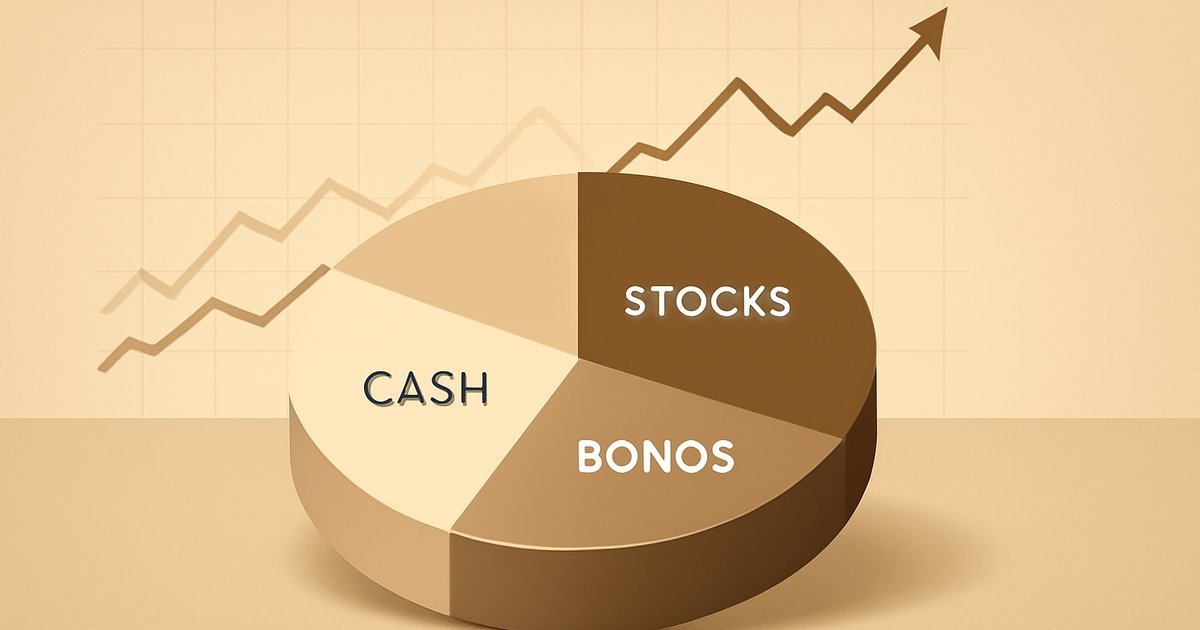
    Asset allocation is the strategy of dividing your investment portfolio among different asset categories — primarily stocks, bonds, and cash — in proportions that match your financial goals, risk tolerance, and time horizon. It’s not glamorous. It won’t go viral on social media. But it’s the single most powerful lever you control as an investor.

    In this guide, you’ll learn exactly how asset allocation works, how to build a strategy that fits your life, what common mistakes cost investors thousands of dollars, and how to adjust your mix as you age. Whether you’re 35 and just starting to build wealth or 58 and approaching retirement, this framework applies to you.

    How Asset Allocation Works: The Core Mechanics

    At its most basic level, asset allocation is about not putting all your eggs in one basket — but with a strategic rationale behind the basket choices, not just random diversification.

    The three main asset classes behave differently under various market conditions:

    • Stocks (equities): Higher long-term return potential, higher short-term volatility. The S&P 500 has delivered an average annual return of roughly 10% before inflation over the past century, according to data from Morningstar — but with years like 2008 (-37%) mixed in.
    • Bonds (fixed income): Lower return potential but more stability. Bonds tend to cushion portfolios when stocks fall. U.S. Treasury bonds are backed by the federal government and carry minimal default risk.
    • Cash and equivalents: Money market funds, CDs, and Treasury bills. Very low risk, very low return — but essential for liquidity and capital preservation.

    Beyond these three, many portfolios also include real estate investment trusts (REITs), international stocks, and commodities as additional diversification layers.

    The key insight: because these asset classes don’t move in perfect lockstep, combining them in the right proportions can reduce your overall portfolio risk without proportionally reducing your expected return. That’s the mathematical magic of diversification, formalized by Nobel laureate Harry Markowitz in his Modern Portfolio Theory.

    The Federal Reserve’s 2025 Survey of Consumer Finances found that households with diversified investment portfolios accumulated significantly more wealth over 20-year periods than those concentrated in a single asset class — reinforcing what the academic research has shown for decades.

    Key Benefits of a Disciplined Asset Allocation Strategy

    Understanding why asset allocation works in practice — not just in theory — helps you stick with it when markets get turbulent.

    1. It Manages Risk Without Eliminating Growth

    A portfolio of 100% stocks maximizes long-term growth potential but can drop 40-50% in a severe bear market. For a 55-year-old with $600,000 saved, that’s a $240,000-$300,000 paper loss — terrifying enough to cause panic selling at exactly the wrong time. A 60/40 portfolio (60% stocks, 40% bonds) historically softened those drawdowns to roughly 20-25% while still generating solid long-term gains.

    2. It Forces Disciplined Rebalancing

    When you have a target allocation, market movements will drift your portfolio away from it over time. Rebalancing — selling what’s grown and buying what’s lagged — enforces the discipline of "buy low, sell high" systematically. According to Vanguard research, disciplined rebalancing can add roughly 0.35% in annual returns over time compared to an unmanaged portfolio.

    3. It Aligns Your Portfolio With Your Real Life

    A 32-year-old software engineer saving for retirement 30 years away has a completely different risk profile than a 61-year-old planning to retire in four years. Asset allocation gives you a framework to match your investment risk to your actual life circumstances — not just generic advice.

    4. It Reduces Emotional Decision-Making

    When you have a written asset allocation policy, market volatility becomes a trigger for systematic action (rebalancing) rather than panic. This is one of the most underrated benefits — the behavioral finance research from Dalbar consistently shows that the average investor significantly underperforms the market they’re invested in because of emotional timing decisions.

    How to Build Your Asset Allocation Strategy: Step-by-Step

    Building your allocation isn’t a one-size-fits-all exercise. Here’s how to approach it systematically:

    Step 1: Define Your Time Horizon

    How many years until you need the money? For retirement accounts, this is usually the distance to age 65-70. Money you’ll need in under 5 years should be in conservative allocations. Money you won’t touch for 20+ years can tolerate much more stock exposure.

    Step 2: Assess Your Risk Tolerance — Honestly

    Risk tolerance has two components: your financial ability to absorb losses (based on income, savings, and time horizon) and your emotional ability to sleep at night during a bear market. Ask yourself: "If my portfolio dropped 30% in 12 months, would I stay the course or sell?" Be brutally honest.

    Step 3: Choose a Starting Allocation Model

    These are widely used starting frameworks — not rigid prescriptions:

    • Aggressive (80-100% stocks): Best for investors 35 and under with 25+ years to retirement and high risk tolerance.
    • Moderate-Aggressive (70/30): Suitable for investors in their 40s with strong income and 20+ year horizons.
    • Moderate (60/40): The classic balanced portfolio — appropriate for many investors in their 50s approaching retirement.
    • Conservative (40/60 or 30/70): For investors within 5-10 years of retirement or those with lower risk tolerance at any age.

    Step 4: Diversify Within Each Asset Class

    Don’t just hold "stocks" — diversify within stocks by holding U.S. large-cap, U.S. small-cap, international developed markets, and emerging markets. Within bonds, consider a mix of short-term and intermediate-term Treasuries, investment-grade corporate bonds, and possibly TIPS (Treasury Inflation-Protected Securities) to hedge inflation.

    Step 5: Implement With Low-Cost Index Funds or ETFs

    For most investors, low-cost index funds and ETFs are the most efficient way to implement an asset allocation strategy. According to the ICI (Investment Company Institute), the average expense ratio for index funds has fallen to around 0.05-0.20%, compared to 0.60-1.00%+ for actively managed funds. Over 30 years, that fee difference can represent hundreds of thousands of dollars in your pocket.

    For context on ETFs as a vehicle for this strategy, you may find it helpful to review Dollar-Cost Averaging: The Smart Way to Invest Consistently, which pairs naturally with an asset allocation plan.

    Step 6: Schedule Annual Rebalancing

    Set a calendar reminder once per year (or when any asset class drifts more than 5 percentage points from its target) to rebalance. Many 401(k) platforms offer automatic rebalancing — use it.

    Costs, Fees, and Risks You Need to Understand

    No investment strategy is free of costs or risks. Here’s what to watch for:

    Expense Ratios and Fund Fees

    Every fund charges an annual expense ratio. Even a 1% fee seems small but compounds dramatically — on a $500,000 portfolio, a 1% annual fee costs you $5,000 per year and potentially $150,000+ over 20 years compared to a 0.05% index fund. Always check the expense ratio before investing in any fund.

    Tax Drag from Rebalancing in Taxable Accounts

    Rebalancing in a taxable brokerage account can trigger capital gains taxes. The IRS taxes short-term capital gains (assets held under one year) as ordinary income — potentially up to 37% depending on your tax bracket. Long-term capital gains rates are more favorable (0%, 15%, or 20%). Strategy: prioritize rebalancing inside tax-advantaged accounts like your 401(k) or IRA first.

    Sequence-of-Returns Risk

    This is especially critical for investors near retirement. If the market crashes in the first few years of your retirement and you’re withdrawing funds, the combination of market losses and withdrawals can permanently impair your portfolio — even if markets eventually recover. A more conservative allocation as you approach retirement helps manage this risk.

    Inflation Risk in Conservative Portfolios

    Holding too much in bonds or cash carries its own risk: inflation erosion. With the CPI averaging around 2-3% historically (though higher in recent years), a portfolio yielding less than inflation loses purchasing power over time. This is why most financial planners recommend maintaining meaningful stock exposure even in retirement.

    Common Asset Allocation Mistakes to Avoid

    These errors are surprisingly common — and surprisingly costly:

    Mistake 1: Setting It and Forgetting It Without Rebalancing

    If you set a 70/30 allocation in 2019 and never rebalanced, the bull market likely pushed you to 85/15 or higher by 2022 — taking on far more risk than you intended, right before a volatile period. Rebalancing isn’t optional maintenance. It’s core to the strategy.

    Mistake 2: Confusing Account-Level Allocation With Total Portfolio Allocation

    Many investors look at each account — their 401(k), their Roth IRA, their taxable brokerage — in isolation. You need to look at your total asset allocation across all accounts. If your 401(k) is 80% stocks and your Roth IRA is also 80% stocks, you’re not as diversified as you think even if the accounts look different on paper.

    Mistake 3: Letting Fear or Greed Override Your Written Plan

    Selling stocks during a market crash and "waiting for things to stabilize" is one of the most expensive moves an investor can make. According to JP Morgan’s annual Guide to the Markets, missing just the 10 best trading days in the S&P 500 over a 20-year period cuts your total return nearly in half. Your written asset allocation plan is your defense against this impulse.

    Mistake 4: Ignoring the Bond Side of the Portfolio

    Many younger investors dismiss bonds entirely as "boring." While aggressive stock allocations make sense for long horizons, having zero bonds means your portfolio could drop 40-50% in a severe bear market with no cushion — potentially forcing you to sell equities at the worst time if you need cash.

    Mistake 5: Not Adjusting Allocation as You Age

    Your risk tolerance and time horizon change over time. A 60% stock allocation at 35 is quite aggressive; at 62 with retirement three years away, it may be dangerously so. Most financial planners recommend gradually shifting toward a more conservative allocation in the 10-15 years before retirement. Target-date funds do this automatically, which is part of their appeal for hands-off investors.

    Alternatives to Consider

    Asset allocation is a strategy, not a single product. Here are a few ways to implement it depending on your situation:

    Target-Date Funds

    Pros: Automatic, hands-off, built-in diversification and rebalancing. Glide path automatically becomes more conservative as you approach retirement. Low cost at major providers like Vanguard and Fidelity (expense ratios often 0.10-0.15%).
    Cons: One-size-fits-all — doesn’t account for your specific risk tolerance, pension income, or other assets. Less tax-efficient in taxable accounts.

    Best for: Investors who want set-it-and-forget-it simplicity, especially inside 401(k) accounts.

    Robo-Advisors

    Pros: Personalized risk questionnaire, automatic rebalancing, tax-loss harvesting (at many providers), low minimum investments. Annual fees typically 0.25-0.50%.
    Cons: Less flexibility than self-directed investing. Fee adds up over time on large portfolios.

    Best for: Investors who want automation with a bit more personalization than target-date funds offer.

    DIY Three-Fund Portfolio

    Pros: Maximum simplicity and low cost. A classic three-fund portfolio (U.S. total market index, international index, U.S. bond index) gives you broad diversification in just three holdings.
    Cons: Requires you to manually rebalance and adjust allocation over time.

    Best for: Cost-conscious, disciplined investors comfortable with a hands-on approach.

    If you’re also thinking about how to grow wealth outside of your investment portfolio, you might explore Bond Ladder Strategy: How to Build Steady Income as a complementary income approach.

    Frequently Asked Questions

    What is the best asset allocation for someone in their 40s?

    There’s no single "best" answer, but a common starting point for a 40-year-old with a 25-year retirement horizon is a 70/30 or 80/20 stock-to-bond split. Your specific income stability, pension benefits, risk tolerance, and other savings will all affect the right mix. Generally speaking, you still have enough time horizon to absorb stock market volatility while beginning to add some bond exposure for balance.

    How often should I rebalance my portfolio?

    Most financial planners recommend rebalancing annually or whenever an asset class drifts more than 5 percentage points from its target. Rebalancing more frequently than quarterly rarely adds value and can increase transaction costs and tax events in taxable accounts.

    Can I use asset allocation inside my 401(k)?

    Absolutely — and your 401(k) is often the best place to start because you can rebalance without triggering taxable events. Most 401(k) platforms offer automatic rebalancing options and a range of index funds across different asset classes. Review your fund lineup and build your target allocation using the lowest-cost options available.

    What happens to my asset allocation when I retire?

    In retirement, the general principle is to shift toward a more conservative allocation to protect against sequence-of-returns risk — the danger that a market crash early in retirement, combined with portfolio withdrawals, could permanently impair your savings. Many financial planners use the "bucket strategy," keeping 1-2 years of expenses in cash, 3-7 years in bonds, and the remainder in stocks for long-term growth.

    Is a 60/40 portfolio still relevant today?

    The 60/40 portfolio (60% stocks, 40% bonds) came under scrutiny in 2022 when both stocks and bonds fell simultaneously — an unusual correlation event. However, over longer periods, bonds still provide meaningful portfolio diversification. Many advisors now suggest variations like 60/30/10 (adding 10% alternatives such as REITs or commodities) to enhance diversification. The core principle of multi-asset diversification remains as relevant as ever.

    Building Wealth Starts With Getting the Foundation Right

    Asset allocation isn’t the exciting part of investing. It won’t generate dinner party conversation. But it is, according to decades of academic research and real-world data, the most important investment decision you’ll make.

    Start by defining your time horizon and honestly assessing your risk tolerance. Choose an allocation model that reflects your actual situation — not just your best-case scenario. Implement it with low-cost index funds or ETFs. Rebalance annually. And adjust gradually as you age.

    That’s the entire framework. Its power comes from consistency and discipline, not complexity.

    If you’re also building out your broader financial plan, consider reviewing Dollar-Cost Averaging: The Smart Way to Invest Consistently — a strategy that pairs naturally with a sound asset allocation plan.

    This article is for educational purposes only and does not constitute financial, tax, or investment advice. Always consult a licensed financial advisor, CPA, or attorney before making financial decisions.

  • 0% APR Credit Cards: How to Use Them Without Getting Burned

    0% APR Credit Cards: How to Use Them Without Getting Burned

    Used strategically, a 0% APR credit card can save you hundreds — even thousands — in interest charges during a promotional period that typically lasts 12 to 21 months.

    Why 0% APR Credit Cards Deserve Your Attention

    The average credit card interest rate in the United States hit a record high of 21.59% in late 2025, according to the Federal Reserve — meaning carrying a balance has never been more expensive. For millions of Americans juggling everyday expenses, large purchases, or lingering debt, that number translates directly into hundreds of dollars lost each year.

    A 0% APR credit card offers a temporary escape from that burden. During the promotional period — which typically runs between 12 and 21 months — you pay zero interest on purchases, balance transfers, or both, depending on the card. That window gives you real financial breathing room to pay down debt or finance a major expense without the interest clock ticking against you.

    In this guide, you’ll learn exactly how 0% APR cards work, who benefits most from them, how to maximize your promotional window, and the hidden traps that catch thousands of cardholders off guard every year. This is for educational purposes — consult a licensed financial advisor for personalized guidance.

    What Is a 0% APR Credit Card and How Does It Work?

    APR stands for Annual Percentage Rate — it’s the annualized cost of borrowing money on your credit card. A standard credit card charges you this rate on any balance you carry from month to month. A 0% APR card waives that charge for a set promotional period after you open the account.

    There are two main types of 0% APR offers:

    • 0% on purchases: No interest on new charges you make during the promo period. Useful for financing a large purchase — like a new appliance, medical bill, or home repair — without paying interest while you pay it down.
    • 0% on balance transfers: No interest on debt you move from a higher-rate card to the new card. This is a classic debt consolidation move.

    Some cards offer both, but read the fine print — the promo periods may differ for each type.

    Here’s the critical mechanic most people miss: interest doesn’t disappear during the promo period, it defers. The moment your promotional window closes, any remaining balance becomes subject to the card’s regular APR — which can easily be 24% to 29%. If you haven’t paid off the balance by then, the savings evaporate fast.

    Generally speaking, 0% APR cards are best suited for people with good-to-excellent credit scores (typically 670 or higher, per FICO standards), since issuers reserve the strongest offers for lower-risk borrowers.

    Key Benefits: What You Actually Gain

    According to Bankrate’s 2026 credit card survey, cardholders who successfully paid off a transferred balance during a 0% promo period saved an average of $1,200 in interest — a meaningful number for any household budget.

    Here’s a concrete example: Suppose you’re carrying $5,000 on a card charging 22% APR. At a minimum payment of around $125 per month, you’d pay roughly $3,400 in interest before the debt is gone — and it would take nearly seven years. Transfer that same $5,000 to a card with an 18-month 0% intro APR and pay $278 per month instead. You’d eliminate the debt completely before interest ever kicks in.

    Beyond debt payoff, 0% APR cards deliver several practical advantages:

    • Cash flow flexibility: Finance a necessary purchase — car repair, medical procedure, appliance replacement — without draining savings.
    • Interest-free float: Spread payments over 12–21 months with zero cost, effectively giving yourself an interest-free loan.
    • Debt consolidation: Combine balances from multiple cards into one manageable monthly payment with no interest accruing.
    • Rewards stacking: Many 0% APR cards also earn cash back or points, letting you benefit on both ends.

    If you’re exploring how to maximize rewards alongside your 0% offer, our guide on Credit Card Rewards Programs: How to Get the Most Out of Them is a smart next read.

    How to Use a 0% APR Card Strategically: Step-by-Step

    The difference between saving $1,500 and ending up deeper in debt often comes down to execution. Follow these steps to make the promotional period work in your favor.

    1. Calculate your total balance first. Before applying, know exactly what you need to pay off or finance. Divide that number by the number of months in the promo period. That’s your required monthly payment to reach zero before interest kicks in. For a $4,800 balance on an 18-month card, that’s $267 per month — non-negotiable.
    2. Check your credit score. Most top-tier 0% APR offers require a credit score of 670 or higher. Pull your free report at AnnualCreditReport.com. Applying with a score below the issuer’s threshold wastes a hard inquiry and risks rejection.
    3. Compare promo period lengths and regular APRs. A 21-month 0% offer is meaningfully better than a 12-month one for larger balances. Also check the go-to APR — the rate that applies after the promo ends. Some cards jump to 29%+ after the introductory period.
    4. Account for the balance transfer fee. Most balance transfer offers charge 3% to 5% of the transferred amount. On a $6,000 transfer, that’s $180 to $300 upfront. Run the math — this fee is almost always worth paying compared to months of high-interest charges, but it’s not free.
    5. Set up autopay immediately. Missing a single payment can trigger penalty APR — sometimes 29.99% — and, depending on the card’s terms, it may cancel your promo rate entirely. Set autopay for at least the minimum, then manually pay more each month.
    6. Stop adding new purchases to your old high-interest cards. Once you transfer a balance, avoid charging the old card again. You’ll undo your progress quickly if the old balance creeps back up.
    7. Track your payoff deadline. Add the promo end date to your phone calendar with a 60-day warning. That gives you time to adjust payment amounts or explore another transfer option if needed.

    Costs, Fees, and Real Risks You Need to Know

    The IRS doesn’t have a role here, but the fine print in your cardholder agreement does. The Consumer Financial Protection Bureau (CFPB) has consistently warned consumers about deferred-interest offers — a structure different from true 0% APR that some store cards use, where interest accrues silently and hits you retroactively if you don’t pay off the full balance. Always confirm your card offers a true 0% promotional APR, not deferred interest.

    Key costs to factor in:

    • Balance transfer fee: 3%–5% of the transferred amount, charged upfront. Non-negotiable on most cards.
    • Annual fee: Some 0% APR cards carry annual fees of $95 or more. Factor this into your savings calculation.
    • Regular APR after promo: Ranges from 19% to 29%+ depending on your creditworthiness. Any remaining balance is instantly subject to this rate.
    • Penalty APR: A missed or late payment can trigger a penalty rate — often 29.99% — that may apply to your entire balance.
    • Cash advance restriction: Cash advances are never included in 0% APR promotions. Using the card for cash withdrawals triggers immediate high-interest charges.
    • Credit score impact: Opening a new card creates a hard inquiry (typically a 5–10 point temporary dip) and increases your total available credit, which can slightly affect your utilization ratio.

    Common Mistakes That Wipe Out Your Savings

    Financial advisors and credit counselors see the same errors over and over. Here are the three most costly ones — and how to avoid each.

    Mistake #1: Not doing the math before you apply. Many people open a 0% APR card without knowing whether they can realistically pay off the balance in time. If your required monthly payment is $350 but your budget only allows $200, you’ll still carry a balance into the high-APR period. Do the division before you apply — not after.

    Mistake #2: Continuing to spend on the old card. Transferring $4,000 in debt to a 0% card feels like a fresh start. But if you charge another $2,000 back onto the old card at 23% APR, you’ve made your situation worse. The 0% card handles old debt; your spending habits must handle the rest.

    Mistake #3: Treating the promo period as a payment vacation. Some cardholders pay only the minimum during the 0% period, thinking they’ll pay more later. The problem: paying minimums on a $5,000 balance might only bring it down to $4,200 over 18 months. When the promo ends, you still have a large balance — now accruing 25% interest. Commit to paying as much as possible, as early as possible.

    Mistake #4: Missing the transfer deadline. Most cards require you to complete a balance transfer within 60 to 120 days of account opening to qualify for the 0% rate. Waiting too long means losing the promotional offer entirely.

    If carrying a balance is part of a larger debt pattern, you may also want to review how a structured budget plan can help you allocate payments more effectively each month.

    Alternatives to Consider

    A 0% APR card isn’t always the best tool for every situation. Here are three alternatives worth evaluating:

    1. Personal debt consolidation loan
    A fixed-rate personal loan from a bank, credit union, or online lender converts revolving credit card debt into a structured installment loan — typically at 8% to 16% APR for borrowers with good credit. Unlike a 0% card, the rate doesn’t expire. The trade-off: you start paying interest immediately, but the payment structure is predictable and you can’t accidentally revolve the balance back up.
    Best for: Large balances over $15,000, or borrowers who struggle with credit card spending discipline.

    2. HELOC (Home Equity Line of Credit)
    Homeowners with sufficient equity can tap a HELOC for debt consolidation at rates that are generally lower than credit cards — often prime rate plus 1–2%. However, your home is the collateral, which significantly raises the stakes if you miss payments.
    Best for: Homeowners with substantial equity and strong income stability. Learn more in our guide on secured credit products for context on collateral-based tools.
    Not ideal for: Anyone with job insecurity or variable income.

    3. Nonprofit credit counseling / debt management plan (DMP)
    Nonprofit credit counseling agencies (accredited through NFCC) can negotiate reduced interest rates — sometimes down to 6–9% — with your creditors and set up a structured DMP. There’s a small monthly fee (typically $25–$50), but it includes accountability and financial coaching.
    Best for: Borrowers with multiple balances, declining credit scores, or those who’ve already tried 0% cards without success.

    Frequently Asked Questions

    Does a 0% APR card mean I pay zero interest on everything?
    Not quite. The 0% rate typically applies to new purchases, balance transfers, or both — depending on the specific offer. It never applies to cash advances, which immediately accrue interest at the standard (often high) cash advance APR. Always read the terms to confirm exactly what’s covered.

    What credit score do I need to qualify for the best 0% APR offers?
    Most top-tier 0% APR offers — those with 18–21 month promo periods — require a FICO score of at least 670, and the strongest cards typically prefer scores above 720. Borrowers in the fair credit range (580–669) may find shorter promo periods or fewer options.

    Can I transfer a balance from the same bank?
    Generally, no. Most issuers prohibit balance transfers between cards from the same bank or credit card network. For example, you typically can’t transfer a Chase balance to another Chase card. You’ll need to move debt to a card from a different issuer.

    What happens if I don’t pay off the balance before the promo ends?
    The remaining balance doesn’t get a grace period — it immediately becomes subject to the card’s regular APR, which can range from 19% to 29%+. Interest accrues going forward on whatever you still owe. It does not retroactively charge interest for the promotional period (assuming a true 0% APR, not deferred interest).

    How many 0% APR cards can I have at once?
    There’s no legal limit, but applying for multiple cards in a short period creates multiple hard inquiries and can raise red flags with issuers. Most financial professionals suggest focusing on one card at a time, maximizing its promo period before considering another application.

    Final Takeaways: Make the Promo Period Work for You

    A 0% APR credit card is one of the most powerful short-term financial tools available to American consumers — but only if you treat the promotional period with the same discipline you’d apply to any loan payoff plan. The math has to work before you apply, your monthly payments have to stay on track, and you have to resist the temptation to rebuild debt on old accounts.

    Start by calculating your required monthly payment, checking your credit score, and comparing the top offers for promo length, balance transfer fees, and go-to APRs. Set autopay the day your card arrives. Mark your promo end date on your calendar.

    Done right, a 0% APR card can help you save hundreds or thousands in interest while accelerating your debt payoff timeline. Done carelessly, it becomes another high-rate balance to manage. The difference is entirely in the planning.

    This article is for educational purposes only and does not constitute financial, tax, or investment advice. Always consult a licensed financial advisor, CPA, or attorney before making financial decisions.

  • Personal Loans for Self-Employed: How to Qualify in 2026

    Personal Loans for Self-Employed: How to Qualify in 2026

    Personal Loans for Self-Employed: How to Qualify in 2026

    Self-employed Americans represent over 16 million workers — yet most struggle to get approved for a personal loan without a traditional pay stub.

    Introduction

    According to the Bureau of Labor Statistics, more than 16 million Americans were self-employed as of 2025 — and that number has only grown since. Freelancers, independent contractors, gig workers, and small business owners all share one frustrating problem: proving income to a lender when you don’t have a W-2.

    If you’ve ever been turned down for a personal loan because you couldn’t hand over two recent pay stubs, you’re not alone. Traditional lenders were built around the 9-to-5 employment model, and the process can feel like it was designed to leave you out.

    But self-employed borrowers can qualify for personal loans — you just need to know what lenders actually look for, which documents to prepare, and where to apply. This guide covers everything from income verification alternatives to the best lender types for your situation, so you can borrow smart and avoid costly mistakes.

    Whether you need funds for a business gap, a large purchase, or debt consolidation, understanding the self-employed loan landscape puts you in control.

    What Is a Personal Loan for the Self-Employed?

    A personal loan is an unsecured installment loan — meaning it’s not backed by collateral like your home or car. You borrow a lump sum, repay it in fixed monthly payments over a set term (usually 12 to 84 months), and pay interest based on your creditworthiness.

    For self-employed borrowers, the process is largely the same as for salaried employees — with one key difference: income verification. Lenders want to confirm you earn enough, consistently enough, to repay the loan. When you don’t have an employer issuing paychecks, you need to show that proof a different way.

    This applies to a wide range of workers:

    • Freelancers and consultants
    • Gig economy workers (rideshare, delivery, etc.)
    • Sole proprietors and LLC owners
    • Independent contractors in any industry
    • Real estate investors with active income

    The challenge isn’t that lenders refuse to work with self-employed applicants — it’s that you need to present your financial picture clearly and completely. Most lenders require at least two years of self-employment history before they’ll consider your income stable.

    Why It Matters: The Real Obstacle Self-Employed Borrowers Face

    A 2024 Federal Reserve report on household credit access found that self-employed individuals were significantly more likely to be denied credit than traditionally employed borrowers with similar income levels — largely due to income documentation gaps.

    Here’s why lenders are more cautious:

    Income variability. A salaried worker earns $5,000 every month like clockwork. A freelancer might earn $2,000 in January and $11,000 in March. Lenders see that variability as risk, even if your annual total is strong.

    Tax write-offs reduce reported income. If you run a business and deduct $30,000 in expenses, your taxable income — what lenders often use — may look much lower than your gross revenue. That’s smart tax planning, but it can hurt your loan application.

    Lack of standardized documentation. W-2 employees hand over two pay stubs and a W-2. Self-employed borrowers need to assemble a package of documents that tells a complete, consistent story.

    Understanding these hurdles is step one. Preparing for them is step two.

    How to Qualify: Step-by-Step for Self-Employed Borrowers

    Qualifying for a personal loan when you’re self-employed isn’t harder — it just requires more preparation. Follow these steps to put your best application forward.

    1. Check your credit score first. Most lenders offering competitive rates require a FICO score of at least 670. Scores above 720 unlock the best APRs, which generally speaking range from 7% to 14% as of 2026. Pull your free credit report at AnnualCreditReport.com before you apply.
    2. Gather two years of tax returns. Your 1040s — personal tax returns — are the gold standard for income verification. Lenders look at your net profit (Schedule C for sole proprietors or Schedule K-1 for partnerships and S-corps). Two years of consistent or growing income signals stability.
    3. Prepare bank statements (12-24 months). Many lenders, especially online and fintech lenders, now accept 12 to 24 months of bank statements as an alternative income verification method. This shows actual cash flow, not just taxable income.
    4. Calculate your average monthly income. Add up your total deposits over 24 months and divide by 24. That’s the number lenders will use to assess your debt-to-income ratio (DTI). Most lenders prefer a DTI below 43%.
    5. Document your business legitimacy. A business license, LLC operating agreement, or client contracts shows lenders your self-employment is real and ongoing — not a side hustle you’re inflating.
    6. Consider a co-signer if needed. If your income documentation is thin or your credit is borderline, a co-signer with a strong W-2 income and good credit can significantly improve your approval odds and interest rate.
    7. Compare lenders before applying. Different lenders have vastly different policies for self-employed borrowers. Use pre-qualification tools (which use soft credit pulls) to compare offers without hurting your score.

    Costs, Fees, and Risks to Know

    Personal loans for self-employed borrowers can be more expensive than average if your income documentation is limited or your credit score is below 700. Here’s what to watch for:

    APR ranges. According to Bankrate’s 2026 data, average personal loan APRs range from roughly 8% for excellent-credit borrowers to over 30% for subprime applicants. Self-employed borrowers with variable income may land in the middle or higher end, depending on their profile.

    Origination fees. Many lenders charge origination fees of 1% to 8% of the loan amount, deducted upfront. On a $20,000 loan, that’s $200 to $1,600 out of your proceeds. Always calculate the true cost using the APR, not just the interest rate.

    Prepayment penalties. Some lenders charge a fee if you pay off your loan early. If you expect a large cash infusion — a seasonal business windfall, for example — confirm the lender has no prepayment penalty before signing.

    Higher rates due to income risk. In most cases, lenders compensate for self-employment income variability by charging a higher rate. Over a 5-year loan, even a 3-percentage-point rate difference on $25,000 adds up to over $2,000 in extra interest.

    Impact on cash flow. Fixed monthly loan payments don’t flex with your income. A slow business month doesn’t reduce your payment. Make sure your average monthly income comfortably covers the payment — ideally with a 20% to 30% buffer.

    Common Mistakes Self-Employed Borrowers Make

    Avoiding these errors can be the difference between approval and denial — or between a reasonable rate and a punishing one.

    Mistake #1: Applying with only one year of tax returns. Most lenders want to see two years of self-employment history. Applying too early in your self-employment journey — even with strong income — may result in automatic denial at traditional banks. Wait until you have two full years of returns, or look for lenders that accept bank statements instead.

    Mistake #2: Maximizing tax deductions right before applying. This is a classic self-employed trap. Heavy deductions reduce your taxable income — which is great for the IRS, but terrible for loan qualification. If you plan to apply for a personal loan, consider working with a CPA to balance your deductions strategically in the prior two years.

    Mistake #3: Applying to multiple lenders with hard pulls. Each hard credit inquiry can lower your FICO score by a few points. Multiple applications in a short window can stack up. Use pre-qualification tools first. If you do apply to multiple lenders, try to cluster applications within a 14-to-45-day window — credit bureaus typically treat multiple loan inquiries in that period as a single event.

    Mistake #4: Ignoring the DTI calculation. Debt-to-income ratio is a make-or-break factor. If you have existing debt — a car loan, student loans, credit card balances — your DTI may be too high even with solid income. Pay down revolving debt before applying, or choose a smaller loan amount to keep your DTI under 43%.

    Mistake #5: Choosing the wrong lender type. Big traditional banks often have the strictest documentation requirements. Online lenders and credit unions frequently offer more flexible underwriting for self-employed borrowers. Don’t assume your primary bank is the best option.

    Alternatives to Personal Loans for Self-Employed Borrowers

    A personal loan isn’t always the best tool. Depending on your situation, one of these alternatives might be a better fit.

    Business Line of Credit. If you’re borrowing for business-related needs, a business line of credit offers revolving access to funds — you draw what you need and only pay interest on what you use. Requirements are similar (business history, revenue documentation), but the structure is more flexible. The downside: business credit lines often have variable rates and shorter draw periods.

    HELOC (Home Equity Line of Credit). If you own a home and have built equity, a HELOC typically offers lower interest rates than unsecured personal loans — often in the 7% to 9% range. Income verification requirements may also be more flexible since the loan is secured by your property. The risk: your home is on the line if you default. Learn more in our guide on HELOC: Home Equity Line of Credit.

    Credit Cards with 0% Intro APR. For shorter-term needs (12 to 21 months), a 0% intro APR credit card can be a cost-effective bridge — especially if you can pay off the balance before the promotional period ends. This works best for smaller amounts and disciplined borrowers. See our comparison of Balance Transfer Credit Cards for more detail.

    Which option is right for you? If you need funds for personal expenses and have good credit, a personal loan offers predictability and simplicity. If you need flexibility or have home equity, a HELOC may save you money. If your need is short-term, a 0% credit card beats all of them on cost — if you’re disciplined.

    Frequently Asked Questions

    Q: Can I get a personal loan if I’ve been self-employed for less than one year?
    A: It’s difficult but not impossible. Some online lenders and fintech platforms will consider bank statements from as little as 6 to 12 months. However, you’ll likely face higher rates and lower loan limits. Building a strong credit score (720+) helps offset the short employment history.

    Q: Do lenders use gross revenue or net income to qualify self-employed borrowers?
    A: In most cases, lenders use your net income — the figure after business expenses and deductions — as reported on your tax returns. Some bank-statement lenders apply an expense ratio to your gross deposits instead. This is why working with a lender that specializes in self-employed borrowers matters.

    Q: What credit score do I need to get a good rate on a personal loan?
    A: Generally speaking, a FICO score of 720 or higher puts you in the prime borrower category and qualifies you for rates in the 8% to 14% range, depending on the lender and loan term. Scores below 670 will either result in denial or rates above 20%, making the loan much more expensive.

    Q: Will applying for a personal loan hurt my credit score?
    A: A hard credit inquiry — which happens when you formally apply — typically lowers your score by 2 to 5 points temporarily. Pre-qualification uses a soft pull and does not affect your score. Always pre-qualify first, then formally apply only to the lender whose offer fits your needs.

    Q: Can I use a personal loan for both personal and business expenses?
    A: Technically yes, since personal loans don’t require the funds to be used for any specific purpose. However, mixing personal and business finances complicates your taxes and accounting. If the primary use is business-related, a business loan or business line of credit is generally a cleaner solution.

    Conclusion

    Being self-employed doesn’t disqualify you from getting a personal loan — it just means you need to come prepared. The borrowers who succeed are the ones who understand what lenders are actually looking for: consistent income, a manageable debt load, solid credit, and complete documentation.

    Start by pulling your credit report, organizing two years of tax returns and bank statements, and calculating your average monthly income. Then use pre-qualification tools to compare offers from multiple lenders — especially online lenders and credit unions that are more flexible with non-traditional income documentation.

    Your next step: gather your financial documents this week and run a pre-qualification check with at least three lenders. You may be surprised at the offers available to you.

    This article is for educational purposes only and does not constitute financial, tax, or investment advice. Always consult a licensed financial advisor, CPA, or attorney before making financial decisions.

  • Budget Planning for Couples: A Step-by-Step Guide

    Budget Planning for Couples: A Step-by-Step Guide

    Introduction

    Couples who budget together are 30% less likely to fight about money — and significantly more likely to build lasting wealth.

    According to a 2025 Fidelity Investments Couples & Money Study, nearly 48% of American couples say financial disagreements are a top source of tension in their relationship. Yet only 43% of couples say they regularly discuss long-term financial goals together. That gap is where financial stress is born — and where smart budgeting can close it.

    Whether you just moved in together, recently got married, or have been sharing finances for years, having a clear budgeting strategy as a couple is one of the most powerful financial decisions you can make. A joint budget isn’t just about tracking expenses. It’s about aligning your values, protecting your future, and growing your net worth as a team.

    In this guide, you’ll learn how couples budgeting works in practice, which method fits your situation, how to set it up step by step, and the most common mistakes to avoid. This is for educational purposes — consult a licensed financial advisor for personalized guidance.

    What Is Couples Budgeting and How It Works

    Couples budgeting is the process of combining — fully or partially — two individuals’ income, expenses, and financial goals into a single, coordinated financial plan. It goes beyond just splitting rent. It’s a structured system that accounts for both partners’ earnings, debts, spending habits, and savings priorities.

    In the US context, couples have three main structures to choose from:

    • Fully joint finances: All income goes into one shared account. All bills, savings, and discretionary spending come from that account. Both partners have full transparency and equal access.
    • Partially joint (hybrid model): Each partner keeps a personal account but contributes to a shared account for joint expenses like rent, groceries, and vacation savings.
    • Fully separate finances: Each person manages their own money independently. Bills are split by agreement (50/50 or proportionally by income).

    According to a 2024 Bankrate survey, about 42% of couples in the US combine all finances, 23% keep everything separate, and 35% use some version of a hybrid approach. There’s no universally correct answer — what matters is that both partners agree on the structure and understand what it means for their taxes, credit, and financial goals.

    Budgeting as a couple also requires addressing income differences. If one partner earns $85,000 and the other earns $42,000, a strict 50/50 split on expenses can create resentment and financial strain. Proportional contributions — where each person pays based on their share of household income — often produce a more equitable and sustainable system.

    Key Benefits of Budgeting as a Couple

    When done right, couples budgeting offers financial advantages that individual budgeting simply can’t replicate.

    1. Combined income accelerates goals. Two incomes make it significantly easier to build an emergency fund, pay off debt, or save for a down payment. A couple earning a combined $120,000 annually can potentially save $24,000 per year (at a 20% savings rate) — far more than either partner could manage alone.

    2. Shared accountability reduces overspending. When both partners review the budget together monthly, impulse spending tends to drop. The psychological effect of knowing your partner will see a $300 clothing purchase creates natural guardrails.

    3. Tax advantages for married couples. Depending on your income combination, filing jointly as a married couple can reduce your overall tax liability. For 2026, the standard deduction for married filing jointly is $30,000 — double the individual amount of $15,000. In some income combinations, the "marriage bonus" (where couples pay less tax together than they would separately) can save thousands annually.

    4. Coordinated retirement planning. Couples can double their annual Roth IRA contributions ($7,000 per person in 2026, or $8,000 if over 50), max out two 401(k) accounts, and develop a Social Security claiming strategy that maximizes lifetime benefits based on both partners’ work histories.

    5. Stronger financial resilience. Two-income households are better positioned to weather job loss, medical emergencies, or market downturns. A shared emergency fund covering 3-6 months of household expenses provides a critical safety net.

    How to Set Up a Budget as a Couple: Step-by-Step

    Getting started doesn’t require a financial planner — but it does require honesty, patience, and a willingness to have difficult conversations. Here’s how to build your joint budget from the ground up.

    1. Schedule a "money date" and set ground rules. Choose a neutral, stress-free time — not after a long workday or during a conflict. Agree that the goal is collaboration, not blame. Bring all financial documents: pay stubs, bank statements, credit card statements, loan balances, and subscription lists.
    2. Map out all income sources. List both partners’ gross and net (take-home) monthly income. Include side income, freelance earnings, rental income, and investment dividends. Use your net income — not gross — for budgeting purposes to avoid overestimating what you can spend or save.
    3. List every expense, including hidden ones. Most couples underestimate monthly expenses by 15-20%. Go through three months of bank and credit card statements and categorize everything: housing, utilities, groceries, transportation, subscriptions, dining, clothing, personal care, kids’ expenses, debt payments, and irregular costs like car maintenance or annual fees.
    4. Choose a budgeting method that fits your lifestyle. The 50/30/20 rule (50% needs, 30% wants, 20% savings/debt payoff) is a solid starting framework. However, couples with high debt loads may want to adopt a more aggressive debt payoff approach, temporarily pushing savings to 25-30% of income. See the next section for a breakdown of top budgeting methods.
    5. Set shared financial goals with timelines. Vague goals fail. Instead of "we want to save for a house," say "we want to save $60,000 for a down payment by January 2029, which means saving $1,500 per month." Break down every goal into a monthly savings target and assign it a line item in your budget.
    6. Open or designate accounts for each budget layer. A practical setup for many couples: one joint checking account for shared bills, one joint high-yield savings account for shared goals, and individual personal accounts for discretionary spending. This gives each partner financial autonomy while keeping shared priorities funded. You can explore HELOC strategies if you’re already homeowners looking to leverage equity for larger goals.
    7. Automate wherever possible. Set up automatic transfers on payday to savings accounts, retirement accounts, and debt payments. Automation removes willpower from the equation and ensures your priorities are funded before discretionary spending begins.
    8. Review the budget monthly — together. Hold a brief monthly review (30 minutes is enough) to compare actual spending versus the plan, discuss upcoming large expenses, and adjust categories as needed. Life changes — so should your budget.

    Costs, Fees, and Risks of Shared Budgeting

    Couples budgeting isn’t without its complications. Understanding the risks upfront helps you build a more durable financial partnership.

    Joint account risks: When you combine finances, one partner’s financial mistakes — overdrafts, missed payments, impulse purchases — affect both of you. Establish clear spending thresholds: for example, any individual purchase over $200 requires a conversation before it’s made.

    Credit score independence: Your credit scores remain separate even in marriage. If one partner has a poor credit history, that doesn’t automatically affect the other’s score — but it will affect joint loan applications (for a mortgage, for example). Lenders typically use the lower of the two middle scores when evaluating joint applicants. The Federal Reserve’s 2024 Consumer Credit Survey found that 1 in 4 married couples carries a credit score gap of more than 100 points.

    Debt responsibility: Generally speaking, debt brought into a marriage remains the individual’s responsibility in most states. However, in community property states (Arizona, California, Idaho, Louisiana, Nevada, New Mexico, Texas, Washington, and Wisconsin), debt incurred during the marriage may be considered joint regardless of whose name is on it.

    Tax filing status changes: Combining finances can affect your tax bracket. In some cases, two high earners combining income face the "marriage penalty" — a situation where filing jointly results in a higher combined tax burden than filing separately would. A CPA can help you run the numbers before committing to a filing strategy.

    Power imbalances: If one partner manages all the finances, the other can become financially dependent and uninformed — a dangerous position in the event of divorce, death, or disability. Both partners should understand and have access to all accounts, statements, and financial plans.

    Common Mistakes Couples Make With Their Budget

    Even financially savvy couples make these missteps. Knowing them in advance gives you a serious advantage.

    Mistake 1: Skipping the "financial values" conversation. Money is emotional. Before building a spreadsheet, talk about what money means to each of you. One partner may have grown up in a household that prioritized saving aggressively; the other may have been raised to spend freely on experiences. Without surfacing these differences, every budget conversation becomes a values conflict in disguise.

    Mistake 2: Ignoring individual "fun money." Budgets that account for every dollar but give each partner no personal spending freedom tend to fail within 90 days. Build in a personal discretionary allowance for each partner — no questions asked. Even $100-$200 per month per person creates a sense of autonomy that keeps both partners committed to the joint plan. If you’re looking for ways to earn back a portion of that spending, a well-chosen credit card rewards program can help offset everyday costs.

    Mistake 3: Treating the first budget as permanent. Your first joint budget will be wrong. Expenses will be underestimated. Income may vary. That’s normal. The mistake is not revisiting and adjusting it. Budget for consistency, not perfection. Many couples find it takes 3-4 monthly cycles to land on a budget that actually reflects their real life.

    Mistake 4: Not planning for irregular expenses. Annual insurance premiums, car registration, holiday gifts, and home repairs aren’t monthly — but they’re predictable. Divide your annual irregular expenses by 12 and set that amount aside monthly in a dedicated "sinking fund" savings account. For many couples, this figure ranges from $300 to $600 per month.

    Mistake 5: Combining debt payoff with savings without a strategy. If you have $900 per month available after expenses, should you pay down credit card debt at 22% APR or max out a Roth IRA? Generally speaking, high-interest debt (above 7-8% APR) should be prioritized over investing in a taxable account — but you should still capture any employer 401(k) match first. A structured approach matters more than raw intensity. You can learn more about systematic investing through dollar-cost averaging once debt is under control.

    Alternatives to Consider Based on Your Situation

    Traditional joint budgeting isn’t the only approach. Here are three alternatives worth evaluating based on your relationship stage and financial complexity.

    Alternative 1: The Proportional Split Model. Each partner contributes to shared expenses in proportion to their income. If Partner A earns 60% of household income and Partner B earns 40%, shared bills are split 60/40. This approach is especially useful for couples with significant income disparities, as it ensures equal sacrifice rather than equal dollar amounts. Pros: Fair across income gaps, reduces financial resentment. Cons: Requires ongoing recalculation as incomes change.

    Alternative 2: The "All-In" Pool with Personal Allowances. All income flows into a joint account. All bills and savings are paid from the pool. Each partner receives an equal personal spending allowance deposited to their individual account each month. Pros: Maximum financial unity, simplest to manage. Cons: Requires high trust and transparency; can feel restrictive to high-earning partners.

    Alternative 3: Separate Finances with a Shared Bills Account. Both partners maintain fully separate finances. Each contributes an agreed amount to a joint account used only for shared expenses (rent, utilities, groceries, vacation savings). Pros: Maximum individual autonomy, no power dynamics. Cons: Harder to build shared wealth quickly; can lead to misaligned long-term goals if not actively managed.

    Frequently Asked Questions

    Should couples combine all their finances after marriage?
    Not necessarily. There’s no legal or financial requirement to combine everything. What matters most is transparency and agreement. Many financially successful married couples use a hybrid model where they maintain personal accounts alongside a joint account for shared expenses. The key is that both partners understand and agree to the structure.

    How do we handle it when one partner earns significantly more?
    The proportional contribution model is often the most equitable solution. Divide shared expenses based on each partner’s percentage of total household income. This ensures both partners sacrifice a similar proportion of their income rather than the same dollar amount. Review the split annually or whenever there’s a significant income change.

    What’s the best budgeting app for couples in 2026?
    Popular options include YNAB (You Need A Budget), Monarch Money, and Copilot — all of which support shared access for two users. Mint was discontinued in 2024, but many of its users migrated to Credit Karma’s built-in budgeting features. The best app is the one both partners will actually use consistently.

    How do we budget when one partner is self-employed or has variable income?
    Base your joint budget on the lowest expected monthly income over the past 12 months. Any income above that baseline gets divided according to a pre-agreed rule — for example, 50% to savings, 30% to an irregular expense fund, 20% to discretionary. This approach keeps the budget stable during lean months and accelerates savings during strong months.

    What happens to our joint budget if we separate or divorce?
    Joint accounts require both parties to agree on closure or fund distribution. Divorce laws vary by state — in community property states, assets and debts accumulated during the marriage are generally split 50/50 regardless of whose name is on the account. Maintaining at least one individual account throughout your marriage is a smart hedge, providing financial independence in any scenario.

    Conclusion

    Building a budget as a couple is one of the most impactful financial decisions you’ll make together. It’s not about tracking every dollar into oblivion — it’s about building a shared vision for your money that reflects both partners’ values, protects against financial emergencies, and accelerates your most important goals.

    Start with a single honest conversation. Map your income and expenses. Choose a structure that fits your relationship. Automate your savings. Review monthly — together. And remember: the goal isn’t a perfect budget on the first try. It’s a sustainable system you’ll both actually follow.

    Your next step: block 60 minutes this week for your first official "money date." Come with three months of bank statements and one financial goal each. That conversation will be worth more than any spreadsheet.

    This article is for educational purposes only and does not constitute financial, tax, or investment advice. Always consult a licensed financial advisor, CPA, or attorney before making financial decisions.

  • Universal Life Insurance: Is It Right for You?

    Universal Life Insurance: Is It Right for You?

    Universal Life Insurance: Is It Right for You?

    Universal life insurance offers lifelong coverage plus a cash value component — but the flexibility comes with real trade-offs you need to understand before signing anything.

    What Most People Miss When Choosing Life Insurance

    According to LIMRA’s 2025 Insurance Barometer Study, nearly 40% of Americans say they need more life insurance than they currently have — yet millions are paying for policies they don’t fully understand. Universal life insurance is one of the most misunderstood products in the market.

    If you’ve been told it’s the “best of both worlds” — permanent protection plus an investment component — that’s partially true. But without understanding how the moving parts work, you could end up with a lapsed policy, a surprise tax bill, or far less cash value than you expected.

    In this guide, you’ll learn exactly how universal life insurance works, who it makes sense for, how much it costs, what can go wrong, and how it stacks up against your other options. By the end, you’ll have a clear picture of whether this type of policy belongs in your financial plan.

    What Is Universal Life Insurance and How Does It Work?

    Universal life insurance (UL) is a type of permanent life insurance — meaning it’s designed to last your entire life, not just a set term. Like whole life, it builds cash value over time. But unlike whole life, it gives you flexible premiums and an adjustable death benefit.

    Here’s the core structure:

    • Death benefit: The amount paid to your beneficiaries when you die. You can typically choose between a level death benefit or an increasing one.
    • Cash value account: A portion of your premium goes into an interest-bearing account that grows over time, tax-deferred.
    • Cost of insurance (COI): Every month, the insurer deducts the actual cost of providing your death benefit from the cash value account. This cost rises as you age.
    • Flexible premiums: You can pay more than the minimum to accelerate cash value growth — or pay less (even skip payments) as long as the cash value covers the COI.

    The interest credited to your cash value depends on the policy type. Standard UL policies credit a rate tied to market indexes or a minimum guaranteed rate — often around 2% to 4%. Indexed UL (IUL) links growth to a stock market index like the S&P 500. Variable UL (VUL) allows direct investment in sub-accounts, similar to mutual funds.

    This flexibility is the main selling point. But it’s also the source of most problems if the policy isn’t managed carefully.

    Key Benefits of Universal Life Insurance

    Universal life insurance has genuine advantages — especially for certain financial situations. A 2024 LIMRA report found that permanent life insurance ownership among households earning $100,000 or more has grown steadily, driven largely by interest in cash-value products.

    1. Lifelong coverage with no expiration date. Unlike a 20-year term policy, UL doesn’t expire. If you have a lifelong financial obligation — a special-needs dependent, a business buyout agreement, or a large estate — permanent coverage matters.

    2. Tax-deferred cash value growth. The interest earned in your cash value account grows without being taxed annually. You only pay taxes if you surrender the policy for more than you’ve paid in premiums, or if the policy lapses with an outstanding loan balance.

    3. Tax-free policy loans. You can borrow against your cash value without triggering a taxable event — as long as the policy stays in force. Many business owners and high-income earners use this feature for large expenses or as a supplemental retirement income stream.

    4. Premium flexibility. Life gets unpredictable. If you’re self-employed or your income fluctuates, the ability to reduce or skip premiums during a difficult year — while the cash value keeps the policy alive — is a meaningful safety net.

    5. Estate planning utility. For individuals with taxable estates (currently above $13.61 million in 2025, per IRS guidelines), universal life held inside an Irrevocable Life Insurance Trust (ILIT) can help cover estate taxes without forcing heirs to liquidate assets.

    For more on customizing your protection, read our guide on Life Insurance Riders: Customize Your Policy for More Protection.

    How to Get Started: Step-by-Step

    Getting into a universal life policy is a significant financial commitment. Here’s how to approach it methodically:

    1. Assess your actual need for permanent coverage. Ask yourself: Do I have a lifelong financial obligation, or do I just need income replacement for 20-30 years? If the answer is the latter, term insurance is almost always cheaper. Permanent insurance makes more sense for estate planning, business succession, or lifelong dependents.
    2. Choose the right UL type. Standard UL offers predictability with a minimum guaranteed rate. Indexed UL offers potential for higher growth but with caps and participation rates. Variable UL offers the most growth potential but also carries investment risk. Match the type to your risk tolerance.
    3. Run an in-force illustration. Ask any agent to show you a policy illustration — a projection of how the policy performs over time at different interest rate assumptions. Critically, ask for a scenario at the minimum guaranteed rate, not just the current rate. This is your worst-case picture.
    4. Fund the policy adequately. Underfunding is the single biggest reason UL policies lapse. Work with your agent or a fee-only financial advisor to determine a funding level that keeps the policy solvent even if interest rates drop.
    5. Complete the underwriting process. You’ll typically complete a health questionnaire and may need a medical exam. Your age, health, smoking status, and coverage amount determine your rate class and premium.
    6. Review annually. Universal life policies require ongoing monitoring. Request an in-force illustration every year or two to confirm the policy is on track.

    Costs, Fees, and Real Risks You Need to Know

    This is where many policyholders get caught off guard. The Federal Reserve’s 2024 Report on the Economic Well-Being of US Households notes that financial surprises remain a major source of stress — and universal life insurance has more potential surprises than most products.

    Cost of insurance (COI) increases: Every year, your COI goes up because you’re older. If your cash value isn’t growing fast enough to offset this, you’ll eventually face a choice: pay higher premiums or watch the policy lapse. This has been a documented problem with older policies issued in the 1980s and 1990s.

    Surrender charges: If you cancel the policy in the early years — typically the first 10 to 15 years — you’ll pay a surrender charge that can significantly reduce the cash value you receive. Charges of 8% to 15% of cash value in year one are common.

    Internal policy fees: Most UL policies charge an administrative fee (often $5 to $10 per month), a premium load (typically 2% to 8% of each premium), and mortality and expense (M&E) charges. These reduce your effective return.

    Policy loan risks: If you borrow against your cash value and don’t repay it, the outstanding loan balance grows with interest. If the loan balance exceeds your cash value, the policy lapses — and the entire unpaid loan amount becomes taxable income in the year of lapse. This is a painful and often unexpected tax hit.

    Indexed UL caps and participation rates: IUL policies limit your upside. If the S&P 500 returns 20% in a year but your cap is 10% and your participation rate is 80%, your credited rate is 8%. On the downside, most IUL policies offer a 0% floor — you don’t lose money in a bad market year, but you also don’t gain.

    Variable UL market risk: Unlike standard UL or IUL, variable policies expose your cash value to actual market losses. A significant market downturn can deplete your cash value and threaten the policy’s survival if you don’t make additional premium payments.

    If you already have group coverage at work, see how it compares by reading Group Life Insurance at Work: Is It Enough Coverage?.

    Common Mistakes to Avoid

    Universal life insurance fails most often not because the product is bad, but because it’s misused. Here are the most common — and costly — errors:

    Mistake 1: Paying only the minimum premium. The minimum premium keeps the policy technically in force but may not be enough to sustain it long-term, especially as COI charges rise. Many policies issued in the 1990s lapsed because policyholders paid only the minimum during a high-interest-rate environment, then watched their cash value collapse when rates dropped. Always fund above the minimum if your budget allows.

    Mistake 2: Ignoring annual policy reviews. Universal life is not a “set it and forget it” product. Failing to review your in-force illustration annually means you won’t catch a funding shortfall until it’s almost too late. Request a review from your insurer or advisor every year.

    Mistake 3: Taking policy loans without a repayment plan. Policy loans are convenient, but they’re not free money. Without a deliberate repayment strategy, loans compound against your cash value and can trigger an unexpected taxable event if the policy lapses. Treat any policy loan like a formal debt obligation.

    Mistake 4: Buying UL when term insurance meets your needs. If your primary goal is income replacement for your dependents during your working years, a 20- or 30-year term policy will likely cost 5 to 10 times less than a UL policy with the same death benefit. Don’t pay for permanent coverage you don’t need.

    Mistake 5: Relying solely on the agent’s illustration. Policy illustrations often show projections at current or optimistic interest rates. Always ask to see the guaranteed scenario — the worst-case performance at the minimum guaranteed rate. If the policy lapses in that scenario before you reach age 90, that’s a significant risk.

    Alternatives to Universal Life Insurance

    Universal life isn’t the only path to lifelong coverage or cash accumulation. Here are three strong alternatives worth comparing:

    Term Life Insurance + Investing the Difference
    This is the most straightforward alternative. A healthy 40-year-old non-smoker can get $1 million in 30-year term coverage for roughly $80 to $120 per month. A comparable UL policy might cost $600 to $900 per month. The difference, invested consistently in a Roth IRA or brokerage account, can generate substantial wealth. This approach works best if you don’t have a lifelong financial obligation. For more context on investing the difference, see our guide on Dollar-Cost Averaging: The Smart Way to Invest Consistently.
    Pros: Lower cost, more investment control, transparent.
    Cons: No permanent coverage; requires investing discipline.

    Whole Life Insurance
    Whole life offers permanent coverage with a guaranteed cash value growth rate and level premiums — no moving parts. It’s more expensive than UL but far more predictable. For people who value guarantees over flexibility, whole life eliminates the risk of underfunding.
    Pros: Guaranteed premiums, guaranteed cash value, no lapse risk from rate changes.
    Cons: Higher premiums, less flexible, lower growth potential.

    Guaranteed Universal Life (GUL)
    GUL strips out most of the cash value component and focuses on providing a guaranteed death benefit to a specific age (e.g., age 90, 95, or 121) at a lower premium than standard UL or whole life. It’s essentially a hybrid that acts more like permanent term insurance.
    Pros: Lower cost than whole life, guaranteed death benefit.
    Cons: Minimal cash value accumulation; inflexible premium structure.

    Frequently Asked Questions

    Is universal life insurance a good investment?
    Generally speaking, UL is not primarily an investment vehicle — it’s a life insurance policy with a cash accumulation feature. The internal fees and COI charges significantly reduce your effective return compared to dedicated investment accounts like a Roth IRA or a taxable brokerage account. For most people, it makes sense as a planning tool for specific needs (estate planning, business succession), not as a primary wealth-building strategy.

    What happens if I stop paying premiums on a universal life policy?
    If you stop paying premiums, the insurer will deduct the monthly COI and fees directly from your cash value account. The policy remains in force as long as the cash value is sufficient to cover those deductions. Once the cash value hits zero, you’ll receive a grace period (typically 30 to 61 days) to make a payment before the policy lapses. A lapsed policy with outstanding loans can create a significant taxable income event.

    Can I convert my term life policy to universal life?
    Most term policies include a conversion privilege that allows you to convert to a permanent policy — including universal life — without new medical underwriting. This is a valuable feature if your health changes. Check your current term policy for conversion deadlines, as they typically expire at a certain age or policy anniversary.

    How much does universal life insurance cost?
    Costs vary significantly by age, health, coverage amount, and policy type. As a rough benchmark, a healthy 45-year-old male might pay $400 to $700 per month for $500,000 in standard UL coverage. Indexed UL with the same coverage might run $450 to $800. Guaranteed UL for the same death benefit could be $200 to $350. Always compare quotes from at least three carriers.

    Is the cash value in a universal life policy taxable?
    The growth inside your cash value account accumulates tax-deferred. Withdrawals up to your cost basis (the total premiums you’ve paid) are generally tax-free. Amounts above your cost basis are taxable as ordinary income. Policy loans are not taxable as long as the policy remains in force. However, if the policy lapses with an outstanding loan, that loan amount may become taxable income in the year of lapse, per IRS rules.

    Is Universal Life Insurance Right for You?

    Universal life insurance is a powerful but complex tool. It works well when used for the right reasons — permanent coverage for lifelong obligations, estate planning, business succession, or supplemental retirement income for high earners who’ve maxed out other tax-advantaged accounts.

    It works poorly when it’s underfunded, unmonitored, or purchased as a substitute for straightforward term coverage and disciplined investing.

    Before you commit, get multiple quotes, demand to see the guaranteed-rate illustration, and work with a fee-only financial advisor who isn’t compensated by commissions. The right policy, properly funded and regularly reviewed, can be a valuable piece of a comprehensive financial plan. The wrong one — or the right one managed poorly — can be an expensive mistake.

    Your next step: Request an in-force illustration or a new policy illustration from at least two carriers, and schedule a conversation with a licensed financial advisor or insurance professional to model exactly how the policy would perform in your specific situation.


    Financial Disclaimer: This article is for educational purposes only and does not constitute financial, tax, or investment advice. Always consult a licensed financial advisor, CPA, or attorney before making financial decisions.

  • Bond Ladder Strategy: How to Build Steady Income

    Bond Ladder Strategy: How to Build Steady Income

    Bond Ladder Strategy: How to Build Steady Income

    Learn how a bond ladder can generate predictable cash flow and reduce interest rate risk — a strategy used by thousands of retirees and conservative investors across the US.

    Introduction

    According to the Federal Reserve’s 2025 Survey of Consumer Finances, nearly 45% of Americans within a decade of retirement have little to no fixed-income allocation in their portfolios. That’s a significant gap — especially when stock market volatility can wipe out years of gains right when you need stability most.

    If you’re a working professional or small business owner between 40 and 65, you’ve probably asked yourself: How do I generate reliable income without betting everything on the stock market? The bond ladder strategy is one of the most time-tested answers to that question.

    In this guide, you’ll learn exactly what a bond ladder is, how it works in practical terms, what it costs to build one, and the most common mistakes investors make when setting one up. By the end, you’ll know whether this approach fits your financial situation — and how to get started.

    What Is a Bond Ladder and How Does It Work?

    A bond ladder is an investment strategy where you purchase multiple bonds with staggered maturity dates — for example, bonds maturing in 1 year, 2 years, 3 years, 4 years, and 5 years. As each bond matures, you either spend the proceeds (if you need income) or reinvest them into a new long-term bond at the end of the ladder.

    Think of it like rungs on a ladder. Each rung represents a bond at a different maturity. You’re never fully locked into one interest rate environment, and you always have bonds coming due at regular intervals.

    Who does this apply to? Generally speaking, bond ladders are most useful for:

    • Pre-retirees and retirees who need predictable income
    • Conservative investors uncomfortable with heavy stock market exposure
    • Small business owners who need to park reserves safely
    • Anyone with a specific future cash need (tuition, a home purchase, or a business investment)

    Bonds themselves are essentially loans you make to a government or corporation. In return, the issuer pays you interest — called a coupon — at regular intervals and returns your principal at maturity. The US bond market is the largest in the world, with over $50 trillion in outstanding debt, according to data from the Securities Industry and Financial Markets Association (SIFMA).

    Key Benefits of a Bond Ladder

    The bond ladder strategy offers several concrete advantages over simply buying a single bond or a bond mutual fund — and understanding those differences matters when you’re protecting decades of savings.

    1. Reduces Interest Rate Risk

    When interest rates rise, bond prices fall. If you own a single long-term bond and rates spike, your investment loses value — at least on paper. With a ladder, only a portion of your holdings is exposed to any single rate environment. As shorter-term bonds mature, you reinvest at higher prevailing rates, which actually benefits you over time.

    2. Provides Predictable Cash Flow

    Every rung of your ladder produces income on a known schedule. For retirees, this can replace or supplement Social Security income with guaranteed payouts. According to Vanguard’s fixed-income research, investors who ladder Treasury bonds can generate consistent income streams over 5 to 20 years without relying on fund manager decisions.

    3. Eliminates Fund Manager Risk

    Unlike bond mutual funds, individual bonds in a ladder have a defined maturity date. You get your principal back — period. Bond funds, by contrast, can and do lose value with no guaranteed recovery timeline.

    4. Liquidity at Regular Intervals

    With bonds maturing regularly, you always have access to cash without being forced to sell at a loss. In most cases, this predictability makes financial planning far more manageable — especially in retirement.

    For example, consider Sarah, 58, a former marketing director. She built a $200,000 bond ladder using US Treasuries spread across five years. Every 12 months, $40,000 matures — giving her a reliable cash cushion while her 401(k) stays invested in stocks for growth.

    How to Build a Bond Ladder: Step-by-Step

    Building a bond ladder is more straightforward than most investors expect. Here’s how to do it in plain terms.

    1. Determine your total investment amount. Bond ladders generally work best with at least $50,000 to $100,000, though some platforms allow you to start smaller. Decide how much you want to allocate to fixed income based on your overall asset allocation.
    2. Choose your bond types. You have several options:
      • US Treasury bonds — backed by the full faith and credit of the US government, essentially zero default risk
      • Municipal bonds (munis) — often tax-exempt at the federal level, great for high earners in higher brackets
      • Corporate bonds — higher yields but more risk; investment-grade corporate bonds (rated BBB or higher by S&P) are most common in ladders
      • FDIC-insured CDs (Certificates of Deposit) — a simpler ladder alternative for smaller amounts
    3. Select your time horizon and rung intervals. A typical ladder spans 5 to 10 years with annual maturities. A 5-year ladder might have bonds maturing in 2026, 2027, 2028, 2029, and 2030.
    4. Purchase bonds through a brokerage. Fidelity, Vanguard, Charles Schwab, and TD Ameritrade all offer bond screeners and secondary market access. You can also buy Treasury bonds directly at TreasuryDirect.gov with no fees.
    5. Decide on a reinvestment rule. When a bond matures, will you reinvest at the long end of the ladder or spend the proceeds? Define this in advance so emotions don’t drive the decision during market volatility.
    6. Track coupon payment schedules. Many investors stagger bonds so that coupon payments arrive monthly or quarterly, providing a more consistent income stream rather than semi-annual lump sums.

    If you’re also focused on consistent accumulation strategies, pairing a bond ladder with a dollar-cost averaging approach for your equity allocation can provide a strong balance between growth and stability.

    Costs, Fees, and Risks to Understand

    No strategy is without drawbacks. In most cases, a bond ladder is a low-cost approach — but there are real costs and risks to account for before you commit.

    Transaction Costs and Markups

    When buying bonds on the secondary market through a broker, you often pay a markup — the difference between what the dealer paid and what you pay. These markups can range from 0.5% to 2% of the bond’s face value, according to FINRA data. Always compare prices across brokers or use TreasuryDirect for new Treasury issues to avoid markups entirely.

    Inflation Risk

    If inflation rises significantly, fixed coupon payments lose purchasing power. One solution: include Treasury Inflation-Protected Securities (TIPS) in your ladder. TIPS adjust their principal value with the Consumer Price Index (CPI), providing some inflation protection.

    Default Risk

    Corporate bonds carry default risk — the issuer might not be able to repay you. Sticking to investment-grade bonds (rated BBB- or above) and limiting corporate bonds to no more than 30–40% of your ladder significantly reduces this risk.

    Liquidity Risk

    If you need to sell a bond before it matures, you may get less than face value — particularly if interest rates have risen since you bought it. This is why matching your bond maturities to your actual cash needs is critical.

    Tax Implications

    Interest income from Treasury bonds is subject to federal income tax but exempt from state and local taxes. Municipal bond interest is typically exempt from federal tax. Corporate bond interest is fully taxable. Depending on your tax bracket, the after-tax yield of a muni bond may exceed a higher-yielding corporate bond. Always run the numbers or consult a CPA.

    This is for educational purposes — consult a licensed financial advisor for personalized guidance specific to your tax situation and income level.

    Common Mistakes to Avoid

    Even a well-designed bond ladder can underperform or cause headaches if you make these common errors.

    Mistake 1: Ignoring Credit Quality

    Chasing yield by buying low-rated bonds (BB or below — so-called "junk bonds") can work in certain economic conditions, but it introduces significant default risk into what’s supposed to be a stable strategy. In most cases, a bond ladder should be anchored in investment-grade securities.

    Mistake 2: Not Matching Maturities to Cash Needs

    If you build a 10-year ladder but need significant cash in year 3 for a home purchase or medical expense, you may be forced to sell bonds at a loss. Before building your ladder, map out your expected financial needs for each year of the ladder’s duration.

    Mistake 3: Over-concentrating in One Issuer

    Some investors buy multiple bonds from the same corporation to get consistent higher yields. If that company faces financial trouble, multiple rungs of your ladder could be at risk simultaneously. Diversify across issuers and sectors.

    Mistake 4: Forgetting to Reinvest Strategically

    When a bond matures, many investors simply let the cash sit in a money market account indefinitely. This defeats the purpose of the ladder. Set a reminder or automatic reinvestment rule to keep the strategy working for you.

    Mistake 5: Underestimating Inflation’s Erosion

    A 4% yield sounds solid — until inflation runs at 5%. Over a 10-year ladder, this gap can meaningfully reduce your real purchasing power. Consider mixing in TIPS or I-Bonds (US Savings Bonds with inflation adjustments) to hedge this risk.

    Alternatives to Consider

    A bond ladder isn’t the only way to generate fixed income. Depending on your situation, one of these alternatives might suit you better — or work alongside a ladder.

    1. Bond Mutual Funds or ETFs

    Pros: Instant diversification, easy to manage, low minimums, highly liquid.
    Cons: No guaranteed maturity date or principal return; fund value fluctuates daily; less control over individual holdings.
    Best for: Beginners or those with smaller portfolios who want broad fixed-income exposure without managing individual bonds. For more on ETFs, you can explore real estate income investing as a complementary strategy.

    2. High-Yield Savings Accounts and CDs

    Pros: FDIC-insured up to $250,000 per depositor, simple to set up, predictable returns.
    Cons: Yields are typically lower than bonds, especially for longer-term CDs; interest is fully taxable.
    Best for: Investors who want a simpler version of the ladder concept with lower minimums and no broker required.

    3. Annuities (Fixed or Fixed-Indexed)

    Pros: Can guarantee income for life, useful for longevity planning in retirement.
    Cons: Complex product structures, high surrender charges, and often significant insurance company fees. Generally speaking, these products require careful evaluation by a licensed advisor before purchase.
    Best for: Retirees who want income they literally cannot outlive and who have already maxed out other retirement vehicles.

    Frequently Asked Questions

    How much money do I need to start a bond ladder?

    You can start with as little as $1,000 using CDs or I-Bonds from TreasuryDirect.gov, but a traditional Treasury or corporate bond ladder typically requires $50,000 to $100,000 to build meaningful diversification across maturities. For smaller amounts, a short-term bond ETF may be more practical.

    Are bond ladders good for retirement income?

    Yes — in most cases, bond ladders are an excellent complement to Social Security and 401(k) withdrawals in retirement. They provide predictable cash flow and eliminate the risk of being forced to sell stocks during market downturns to cover expenses.

    What’s the best type of bond for a ladder?

    US Treasury bonds and TIPS are the most common choices because they carry no default risk. For investors in higher tax brackets (32% or above), municipal bonds may offer better after-tax yields. Corporate bonds can boost returns but add risk — stick to investment-grade if you include them.

    What happens if interest rates rise after I build my ladder?

    Rising rates will reduce the market value of your existing bonds, but this doesn’t matter if you hold them to maturity — you’ll still receive your full principal back. Meanwhile, as shorter-term bonds mature, you reinvest at higher rates, which actually benefits you over time.

    Can I build a bond ladder inside a Roth IRA or 401(k)?

    Yes. Building a bond ladder inside a tax-advantaged account like a Roth IRA or traditional IRA shields coupon payments from annual taxation — a significant benefit, especially for corporate bonds. However, IRS contribution limits apply to these accounts, and you’d be using funds already inside the account to purchase the bonds.

    Conclusion

    A bond ladder is one of the most disciplined, transparent, and time-tested strategies for generating reliable income from your portfolio. It doesn’t promise outsized returns — and that’s exactly the point. It gives you predictability, protection from interest rate swings, and flexibility when life gets expensive.

    If you’re within 10 to 15 years of retirement or simply need a portion of your portfolio to behave with more certainty, building even a modest ladder of US Treasuries is a concrete first step worth taking. Start by mapping out your cash needs over the next five years, then explore TreasuryDirect.gov or a major brokerage’s bond screener to price out your first rungs.

    As always, your specific tax bracket, income needs, and overall financial picture will shape how a bond ladder should look for you. Working with a licensed financial advisor or CPA is the best way to tailor this strategy to your situation.

    Financial Disclaimer: This article is for educational purposes only and does not constitute financial, tax, or investment advice. Always consult a licensed financial advisor, CPA, or attorney before making financial decisions.

  • Credit Card Rewards Programs: How to Get the Most Out of Them

    Credit Card Rewards Programs: How to Get the Most Out of Them

    Credit Card Rewards Programs: How to Get the Most Out of Them

    Americans left an estimated $16 billion in unused credit card rewards on the table last year — here’s how to make sure you’re not one of them.

    Introduction

    According to a 2025 Bankrate survey, nearly 1 in 3 Americans with a rewards credit card has never fully redeemed their points or miles — meaning billions of dollars in earned value simply expire or go unclaimed every year. If you’re carrying a rewards card and not actively managing your benefits, you’re essentially leaving part of your paycheck behind.

    Credit card rewards programs are one of the most accessible tools in personal finance. Done right, they can offset travel costs, generate real cash back, and even help fund major purchases — all without paying a single dollar in interest. But they’re also riddled with fine print, expiration rules, and tiered systems that confuse even financially savvy cardholders.

    In this guide, you’ll learn exactly how credit card rewards programs work, which types deliver the highest value, how to stack and maximize your earning potential, and the costly mistakes most people make. Whether you’re earning points, miles, or cash back, this breakdown will help you treat your rewards card like a financial asset — not just a piece of plastic.


    What Are Credit Card Rewards Programs and How Do They Work?

    A credit card rewards program is a loyalty system offered by card issuers — like Chase, American Express, Capital One, or Citi — that gives you something back every time you spend. The "something back" takes three main forms: points, miles, or cash back.

    Points are the most flexible format. You earn them per dollar spent and can redeem them for travel, gift cards, merchandise, or statement credits. Programs like Chase Ultimate Rewards and Amex Membership Rewards are point-based and highly transferable.

    Miles are airline-specific (or flexible travel currencies) earned through co-branded airline cards or general travel cards. Delta SkyMiles, United MileagePlus, and Capital One Miles are common examples. You redeem them for flights, upgrades, or hotel stays.

    Cash back is the simplest format — a percentage of your spending returned as a statement credit, check, or deposit. No conversion math, no transfer partners. Just money back.

    According to the Consumer Financial Protection Bureau (CFPB), rewards cards are now the majority of credit cards held by US adults, with over 175 million rewards cardholders in the country. The mechanics are simple: spend money, earn rewards at a set rate (usually 1% to 5%), and redeem them before they expire or lose value.

    Most programs also include welcome bonuses — large one-time rewards for hitting a spending threshold in your first few months. These bonuses alone can be worth $500 to $1,000 or more in travel value.


    Key Benefits of Credit Card Rewards Programs

    When used strategically, rewards programs can deliver outsized financial value compared to the effort required. Here’s what you actually get when you optimize your card usage.

    Real dollar-value returns. A card earning 2% cash back on all purchases returns $400 per year on $20,000 in annual spending — with zero lifestyle changes. Premium travel cards that earn 3x to 5x points in bonus categories can return the equivalent of $600 to $1,200+ annually for average spenders.

    Welcome bonuses that front-load value. Many premium cards offer sign-up bonuses worth $500 to $1,000 in travel redemptions when you meet an initial spending requirement (typically $3,000 to $5,000 in the first 3 months). For a new cardholder, that’s an immediate, tangible financial win.

    Category multipliers that align with your spending. If you spend heavily on groceries, gas, dining, or travel, category-specific cards can earn you 3x to 6x points in those areas. The Blue Cash Preferred card from American Express, for instance, historically offers 6% back at US supermarkets (up to $6,000 per year), which is significant for families.

    Travel perks that offset annual fees. Premium cards with $550+ annual fees often include statement credits for travel, airport lounge access, Global Entry reimbursement, and hotel status — benefits that regularly exceed the card’s annual cost when used consistently.

    Purchase protection and extended warranties. Many rewards cards include built-in insurance on purchases, cell phone protection, and trip cancellation coverage — benefits most cardholders don’t realize they have until they need them.


    How to Maximize Your Credit Card Rewards: Step-by-Step

    Getting full value from rewards programs requires a system — not just swiping your card randomly. Follow these steps to build a structured approach.

    1. Audit your current spending categories. Pull three months of bank and credit card statements. Identify where you spend the most — groceries, dining, gas, travel, subscriptions, or general retail. Your dominant categories should determine which card you use most frequently.
    2. Match your top card to your top category. If dining is your biggest expense, a card like the Chase Sapphire Preferred (historically 3x on dining) beats a flat-rate card. If you spend evenly across categories, a 2% flat-rate card like the Citi Double Cash is often your best baseline earner.
    3. Pursue a welcome bonus strategically. If you have a large planned expense — a home repair, vacation, medical bill — timing a new card application around that purchase can help you hit the welcome bonus threshold without overspending. Never spend beyond your means just to chase a bonus.
    4. Use a card ecosystem when possible. Transferable points currencies (Chase Ultimate Rewards, Amex Membership Rewards, Capital One Miles) gain dramatically more value when transferred to airline or hotel partners. A point worth 1 cent redeemed for cash back might be worth 1.5 to 2 cents transferred to an airline partner for a business-class seat.
    5. Set up automatic redemptions or alerts. Many programs let you set automatic cash-back redemptions above a threshold or send expiration alerts. Activate these to prevent value from expiring. IRS rules note that rewards earned through spending are generally not taxable, but sign-up bonuses received without any spending requirement may be treated as taxable income — consult a CPA if you receive large welcome offers structured as direct payments.
    6. Revisit your card lineup annually. Your spending habits change. A card that was optimal at 35 may not suit your life at 48. Review whether the annual fee still makes sense and whether better alternatives exist in the current market.

    If you’re just starting to build credit and don’t yet qualify for premium rewards cards, a secured credit card can be a useful first step before graduating to rewards-earning products.


    Costs, Fees, and Risks of Rewards Programs

    Rewards cards are not free money — and the fine print matters. Here’s what to watch carefully.

    Annual fees. Premium rewards cards typically charge $95 to $695 per year. These fees are only worth paying if your rewards and perks exceed the cost. A $550 annual fee on a card you use for $3,000 in spending annually is rarely justified — the math has to work in your favor.

    High APRs that erase rewards. Rewards cards carry some of the highest interest rates in the credit card market. According to Federal Reserve data from early 2026, the average credit card APR exceeded 21%. If you carry a balance — even occasionally — a single month of interest charges can wipe out an entire quarter of rewards earned. Rewards cards only make financial sense if you pay your balance in full every month.

    Point devaluation. Airlines and hotel chains have the right to change their points programs at any time, and they frequently do. A points redemption that cost 25,000 miles for a domestic flight in 2022 might now require 40,000. Don’t hoard points expecting them to gain value — redeem them within a reasonable timeframe.

    Foreign transaction fees. Many rewards cards (including some travel cards) charge 1% to 3% on purchases made abroad. If you travel internationally, confirm your card has no foreign transaction fee before using it overseas.

    Spending triggers and psychological traps. Research published by the Journal of Consumer Research has shown that credit card use — particularly for rewards — can increase overall spending. Be honest about whether chasing rewards is causing you to spend more than you would otherwise. A 3% reward on $500 you wouldn’t have spent otherwise is a net loss, not a gain.


    Common Mistakes to Avoid

    Even financially literate cardholders fall into these traps. Avoid them to protect your financial position.

    Mistake #1: Letting points expire. Most rewards programs have expiration policies tied to account inactivity. If you don’t earn or redeem points for 12 to 24 months, your balance may be forfeited. Set a calendar reminder to make at least one qualifying transaction every 12 months if you’re not actively using the card.

    Mistake #2: Carrying a balance on a rewards card. This is the single most expensive mistake. If you earn $80 in cash back but pay $120 in interest because you carried a $600 balance for two months at 21% APR, you lost $40. Rewards cards and revolving balances are financially incompatible. If you’re in debt, consider a lower-rate card or a debt payoff strategy before focusing on rewards.

    Mistake #3: Using the wrong card for the wrong category. Swiping a flat-rate 1.5% card at a grocery store when you have a 6% grocery card in your wallet is leaving 4.5 cents per dollar behind. For a family spending $800/month on groceries, that’s a $432 annual difference. Know your card’s category bonuses and use the right tool for every purchase.

    Mistake #4: Ignoring the sign-up bonus requirements. Some cardholders apply for a card expecting the welcome bonus, then fail to meet the spending threshold. Others overspend to hit the threshold — defeating the purpose. Always confirm you can hit the requirement through normal spending before applying.

    Mistake #5: Redeeming points for poor-value options. Gift cards and merchandise redemptions typically offer 0.5 to 0.8 cents per point — far below the 1.5 to 2 cents per point achievable through airline or hotel transfers. Unless you have no other option, avoid redeeming premium points for merchandise.


    Alternatives to Consider

    Rewards cards aren’t the right tool for every financial situation. Here are three alternatives worth evaluating depending on where you are financially.

    1. Balance Transfer Cards (0% APR introductory offers)
    If you’re carrying high-interest credit card debt, a balance transfer card with a 0% APR promotional period (typically 15 to 21 months) will save far more money than any rewards program could earn you. Paying off $5,000 in debt at 21% APR costs roughly $1,050 per year in interest — far more than any rewards card would return. Prioritize debt elimination before optimizing rewards.

    2. Low-Interest Credit Cards
    For cardholders who occasionally carry a balance, a low-interest card (APR in the 12% to 15% range) may cost less overall than a high-reward, high-APR card — even factoring in the rewards earned. This trade-off depends heavily on your average monthly balance.

    3. Debit Cards with Rewards
    Some banks and fintechs now offer debit cards that earn modest cash back (typically 1% to 2%) on everyday purchases. These are lower-risk for people who struggle with credit card spending discipline, though they generally offer fewer consumer protections than credit cards under federal law.

    If you’re building or rebuilding your credit profile and not yet eligible for premium rewards cards, explore our full guide on secured credit cards as a starting point.


    Frequently Asked Questions

    Are credit card rewards taxable income?
    Generally speaking, rewards earned through spending (points, miles, cash back) are not considered taxable income by the IRS, as they’re treated as a discount on purchases. However, sign-up bonuses that don’t require any spending to unlock — rare, but possible — may be reported as taxable income on a 1099-MISC. Consult a CPA if you receive a bonus structured this way.

    How many rewards cards should I have?
    Most financially organized adults manage two to three cards effectively: one for category bonuses (dining, groceries, travel), one flat-rate card for everything else, and possibly one co-branded card if you’re loyal to a specific airline or hotel chain. Beyond three cards, complexity and the risk of missed payments typically outweigh the incremental rewards benefit.

    Do rewards credit cards hurt your credit score?
    Applying for a new card triggers a hard inquiry, which typically reduces your score by 5 to 10 points temporarily. Opening a new account also lowers your average account age. Over time, responsible use (on-time payments, low utilization) improves your score. The net effect depends on your existing credit profile and how many cards you open within a short period.

    What happens to my rewards if I cancel a card?
    This depends on the program. With some issuers — particularly those with transferable currencies like Chase or Amex — canceling a card can forfeit unredeemed points if you don’t have another card in the same program. Always redeem or transfer your points before canceling any rewards card.

    Is it worth paying a $550 annual fee for a premium rewards card?
    Only if you actually use the card’s benefits. A $550 annual fee card that includes a $300 travel credit, $120 in dining credits, and Global Entry reimbursement ($100) has effectively reduced its net cost to $30 — before you earn a single point. The key question is whether you will realistically use the credits offered. If most of those perks don’t match your lifestyle, a no-fee or $95-fee card will likely deliver better overall value.


    Conclusion

    Credit card rewards programs can function as a genuine financial asset — returning hundreds or even thousands of dollars per year to disciplined cardholders. But they require a clear strategy: matching your card to your spending habits, paying your balance in full every month, redeeming rewards at high-value rates, and reviewing your card lineup as your life changes.

    The core rule is simple: rewards are a bonus on spending you were already going to do — never a reason to spend more. If you’re carrying credit card debt, prioritize paying it off before optimizing rewards. And if you’re just starting out with credit, build your foundation first with responsible card use.

    Your immediate next step: log into your current rewards account, check your balance, confirm your points aren’t near expiration, and calculate whether your current card still matches your top spending categories. Small adjustments made today can compound into significant savings over the next few years.

    This article is for educational purposes only and does not constitute financial, tax, or investment advice. Always consult a licensed financial advisor, CPA, or attorney before making financial decisions.